Water-resistant vs waterproof sunscreen: what the label means
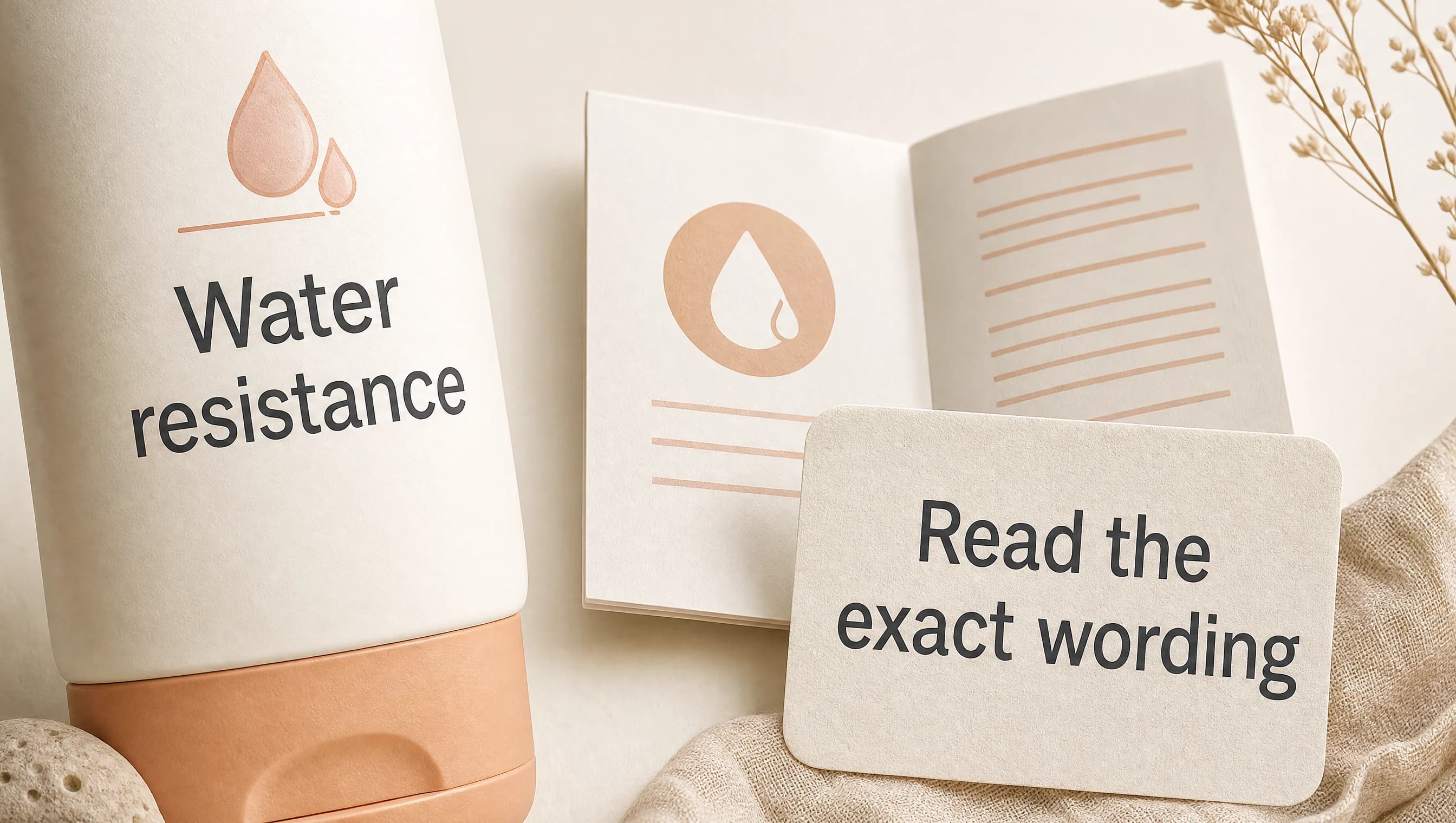
Water-resistant sunscreen has a limited tested claim; waterproof sunscreen is not a valid promise to look for. In the US, the water-resistance label specifies 40 or 80 minutes of swimming or sweating. Read the reapplication directions too, because towel drying and other instructions can require action before that interval ends.
Water resistance answers a specific question
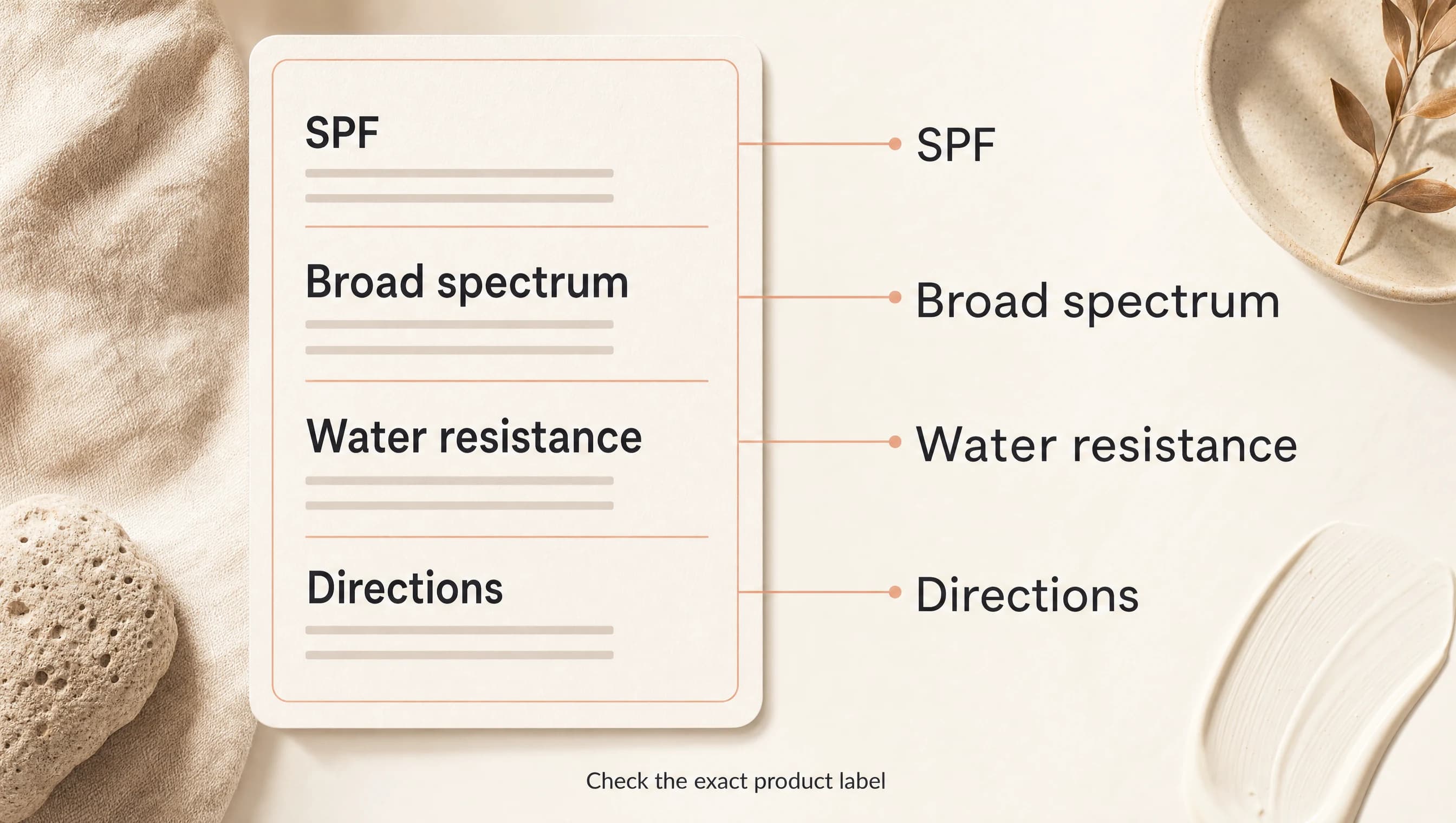
The claim concerns maintaining protection during defined water exposure. It is not a statement that the product cannot be washed, rubbed or wiped away, and it does not mean that the rest of the directions are optional.
FDA consumer advice explicitly distinguishes water resistance from waterproof and sweatproof claims. AAD's label guide explains the 40- and 80-minute designations. This is a separate label feature from the SPF number.
| Label feature | What it addresses | What it does not promise |
|---|---|---|
| SPF | Tested sunburn protection | Duration in a pool |
| Broad spectrum | UVA and UVB protection | Water resistance |
| Water resistant, 40 or 80 minutes | A tested water-exposure interval | Waterproof wear |
| Reapplication directions | When to maintain the application | A once-daily guarantee |
Read the instructions as a set
CeraVe's US Hydrating Sheer Face and Body SPF 30 identifies 80-minute water resistance and separate reapplication triggers. That example shows why a single front-label number is not the complete operating instruction.
Do not choose one instruction and ignore the others. If towel drying triggers reapplication, the fact that your swim was brief does not cancel it. If the ordinary reapplication interval has arrived, water resistance does not turn it into an all-day product.
Choose for the activity you expect
A daily commute, a swim and an outdoor workout create different practical demands. Start with what you will do, then look for a suitable product and directions.
Imagine choosing between a comfortable everyday formula with no water-resistance statement and a different product with an explicit swimming interval. The second may better match the pool plan. That does not mean the first is inferior for every possible setting.
- For a pool or sweaty outing, look for an explicit water-resistance statement on the exact product.
- Copy its water-time limit together with towel-drying and other reapplication instructions; keep all of those triggers in the plan.
- Keep the bottle accessible during the outing rather than leaving reapplication dependent on returning home.
- If the label does not fit the activity, choose a suitable product instead of treating “waterproof” as missing reassurance.
Avoid marketing shortcuts
Words such as sport, active and beach can describe positioning, but they are not substitutes for the exact protection and water-resistance statements. A solid stick, thick cream or high SPF should not be used to fill in a missing claim.
Similarly, another country's packaging may use different language or testing conventions. This article explains the US 40/80-minute wording. If you are reading a product from another market, use its official directions and the relevant local guidance rather than relabeling it yourself.
The practical test of your plan is whether you can follow it. A bottle kept far away, an unreadable label or no break for reapplication can defeat the convenience of choosing an appropriate product.
Frequently asked questions
Is an 80-minute claim twice as protective as a 40-minute claim?
It indicates a different tested water-resistance interval, not twice the SPF or a universal comparison of real-world protection.
Does sweatproof mean I can skip reapplication during sport?
Do not rely on that promise. Check the legitimate water-resistance statement and the actual instructions for sweating and reapplication.
Can I use a non-water-resistant sunscreen at the beach?
Consider the activity rather than the location name. If swimming or substantial sweating is part of the plan, choose suitable water-resistant protection and follow its directions.
Related decisions
- Mineral vs. Chemical Sunscreen for Sensitive Skin: The Formula-First Guide
- The best facial sunscreen for mature skin: a hydrating, low-settle guide
- Best Sunscreen for Combination Skin: Find the Finish That Works on Every Zone
- When to reapply sunscreen after swimming — Turn the water-resistance label into a concrete reapplication decision.
- Lip balm with spf vs regular lip balm — Apply label-reading to the separate product used on the lips.
Sources
AAD: How to decode a sunscreen label (aad.org) — https://www.aad.org/public/everyday-care/sun-protection/shade-clothing-sunscreen/understand-sunscreen-labels
FDA: Sun safety and sunscreen precautions (fda.gov) — https://www.fda.gov/consumers/consumer-updates/tips-stay-safe-sun-sunscreen-sunglasses
CeraVe US: Hydrating Sheer Face and Body SPF 30 (cerave.com) — https://www.cerave.com/sunscreen/hydrating-sheer-sunscreen-broad-spectrum-spf-30-for-face-and-body
Clear guidance, checked before publication.
Solvi articles are structured by our editorial team and reviewed for clarity, consistency, and responsible health language. We update pages when guidance or product information changes.