A Good Morning Skincare Routine That Does the Most With Less


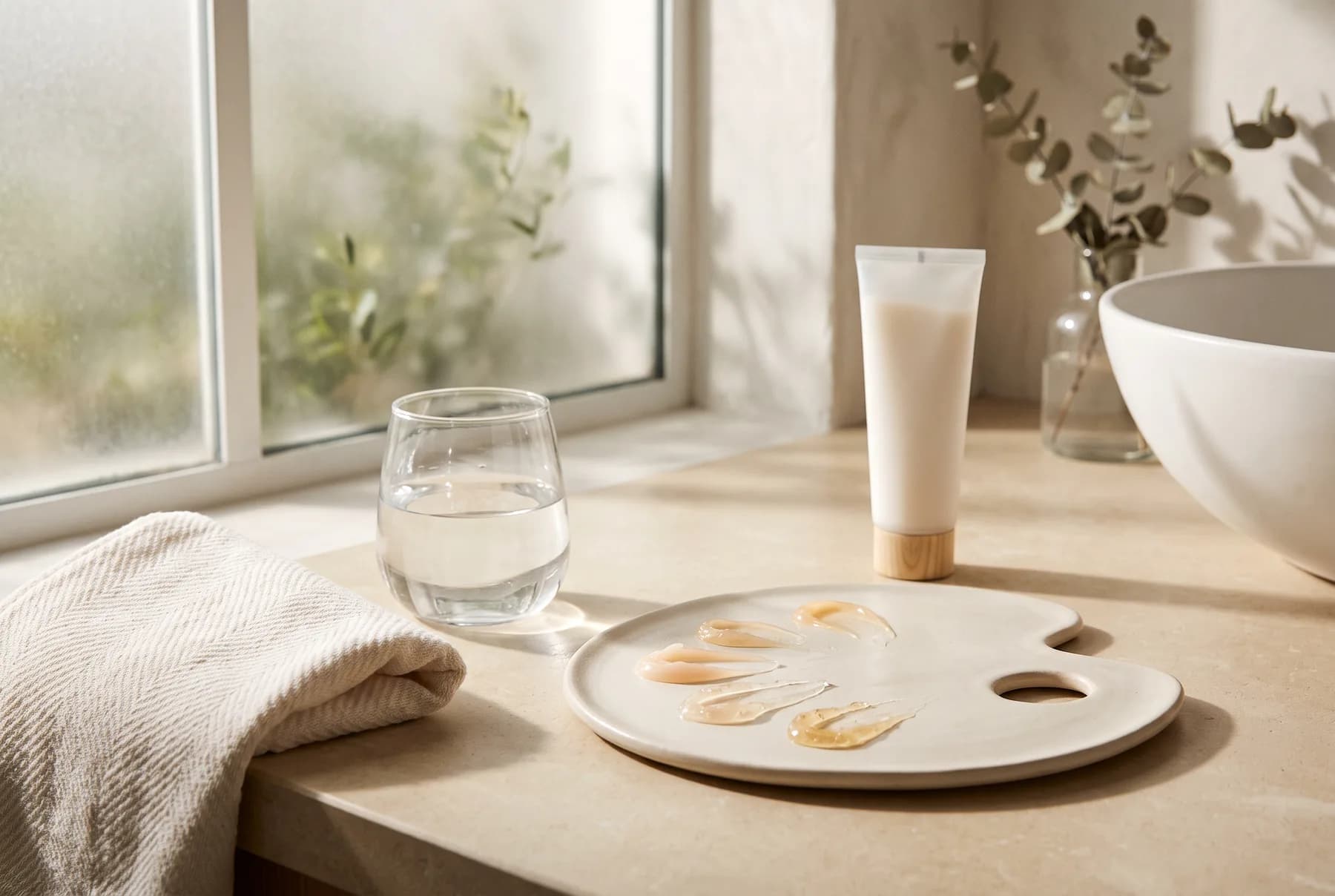
A good morning skincare routine is not the longest one; it is the one you will actually finish before leaving the house. Start with a gentle cleanse or water rinse, use one optional antioxidant treatment, add moisturizer when your skin needs it, and finish with broad-spectrum SPF 30–50.
For most people, sunscreen is the non-negotiable center of a daytime routine. Everything before it should earn its place by making skin feel more comfortable, look more even, or help your sunscreen and makeup apply smoothly—not by turning the bathroom counter into a second job.
The five-minute good morning skincare routine

Think of AM skincare as a light, wearable base layer. Nighttime can be where you reach for richer textures and more involved rituals; daytime is about comfort, consistency, and sun protection. The ideal finish is skin that feels cushioned but not coated, with sunscreen that does not pill when you touch it or add makeup.
The sequence is deliberately simple. Apply from the lightest texture to the richest, and give a serum a brief moment to settle before continuing. Sunscreen comes last in skincare, immediately before makeup.
- Cleanse gently—or rinse. Use a gentle hydrating cleanser if you wake up oily, sweaty, or prefer a fully clean canvas. A water rinse can be the lower-friction choice when your skin feels comfortable and your evening routine was more substantial.
- Use one treatment, if it suits you. Choose a stable vitamin C serum when brightening is your daytime priority, or niacinamide if you want a potentially gentler antioxidant-facing option for a sensitive routine.
- Moisturize if needed. Reach for a light lotion, gel-cream, or cream according to how dry or comfortable your skin feels that morning.
- Apply broad-spectrum sunscreen SPF 30–50. Make this the final skincare layer. A tinted formula can be especially appealing if pigmentation is a concern or you want light, makeup-like evening of the complexion.
That is the full architecture. Eye cream and makeup primer are optional additions, not missing steps. If an eye product makes the area feel more comfortable or a primer helps your makeup wear as you like, use it; if not, let the essential steps remain pleasingly brief.
Build your routine by daytime need
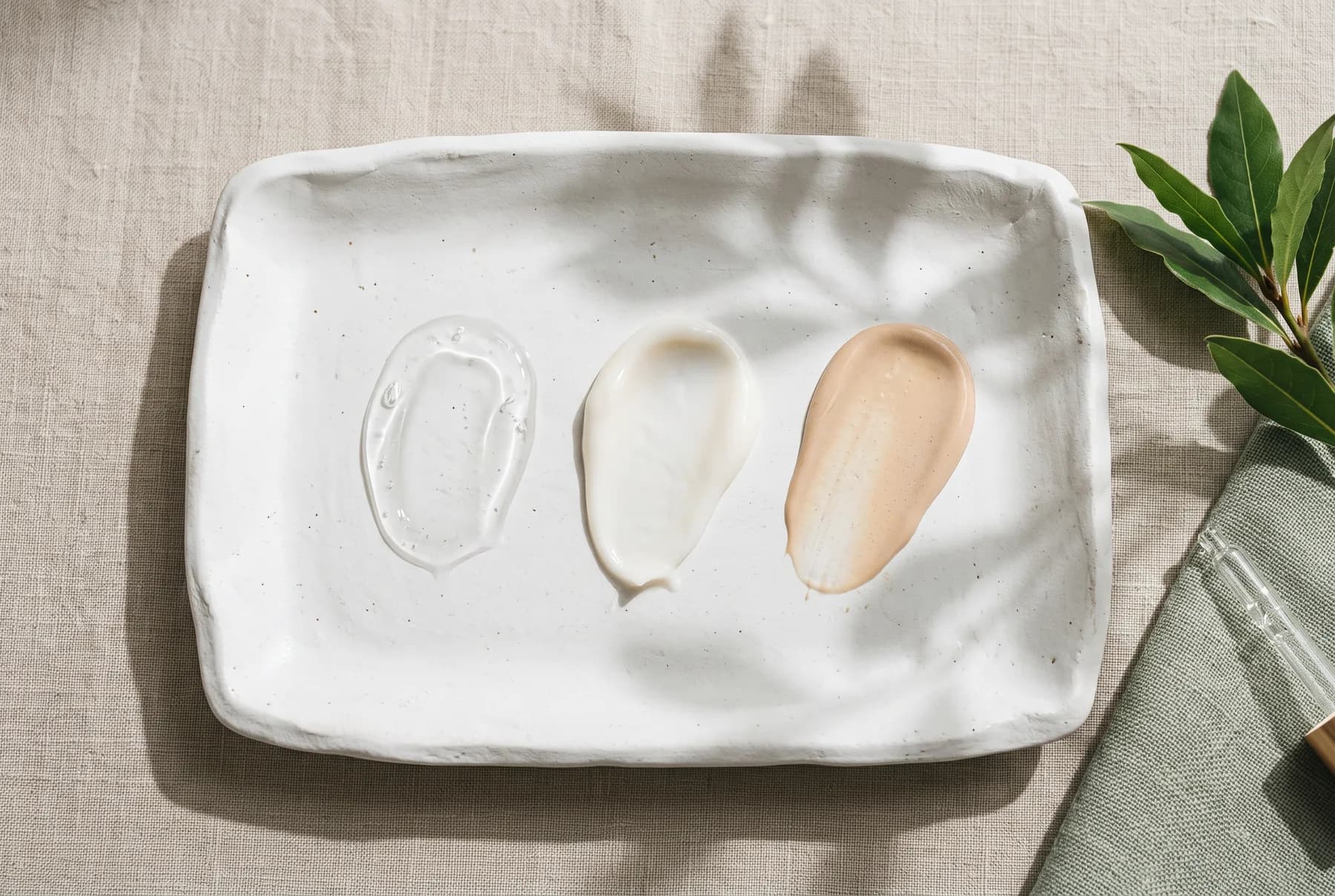
The smartest way to shop is to identify the job you want your routine to do before choosing a formula. “For all skin types” can be useful shorthand, but texture, finish, and your tolerance for active ingredients often matter more at 8 a.m. than a broad skin-type label.
| Daytime priority | Consider this format | What it feels like | Main tradeoff |
|---|---|---|---|
| Hydration and comfort | Gentle cleanser or water rinse, then a light lotion or gel-cream | Cushioning, soft, usually quick to spread | Richer creams may feel too present beneath makeup in humid weather |
| Brighter-looking routine | Stable vitamin C serum under sunscreen | Typically thin, fluid, or lightly viscous | Reactive skin may prefer to skip it |
| A sensitivity-minded edit | Niacinamide serum or no treatment step | Often a simple watery serum or light lotion | It is still another layer to assess for comfort |
| Oil-control feel | Water-light serum, minimal moisturizer as needed, lighter-finish SPF | Fresh, fast-setting, less emollient | An overly matte finish can feel tight on drier skin |
| Light coverage for daytime | Tinted broad-spectrum SPF 30–50 | Creamy to fluid; softly complexion-evening | Shade, finish, and makeup pairing require more consideration |
If hydration is your priority
Keep the treatment step optional and put your attention on a comfortable moisturizer-sunscreen pairing. A gel-cream can be an elegant match for someone who dislikes the slip of a heavier cream, while a light lotion offers a more classic soft finish. In dry indoor air or cold weather, you may want moisturizer even when your sunscreen has a creamy texture.
- Look for a cleanser described as gentle or hydrating rather than one chosen solely for a squeaky-clean finish.
- Choose a moisturizer that disappears without leaving a waxy or tacky film.
- Decide whether your sunscreen feels hydrating enough on its own only after wearing it through a normal morning.
If brightening is your priority
A stable vitamin C serum is the focused option in this routine. It belongs before moisturizer and sunscreen, in a thin layer that can settle rather than slide around beneath the next product. Keep the rest of the routine quiet: a familiar moisturizer, then your chosen SPF.
The appeal of this approach is restraint. A serum can be purposeful, but it should not make sunscreen application feel like a negotiation. If the combination pills, feels stingy, or adds too much shine for your preference, a simpler routine is a valid upgrade.
If sensitivity is your priority
Trade ambition for ease. Niacinamide is the suggested alternative when a vitamin C step feels like too much for a sensitive routine, but it is also fine to omit a serum entirely. A reliable sunscreen you enjoy applying is more valuable than an elaborate lineup you avoid.
- Favor fewer layers and introduce only one variable at a time.
- Consider physical blockers if you find chemical filters feel reactive on your skin.
- Keep the cleanser mild, and use moisturizer only to the degree your skin feels it needs.
Makeup-compatible sunscreen is the real finishing step
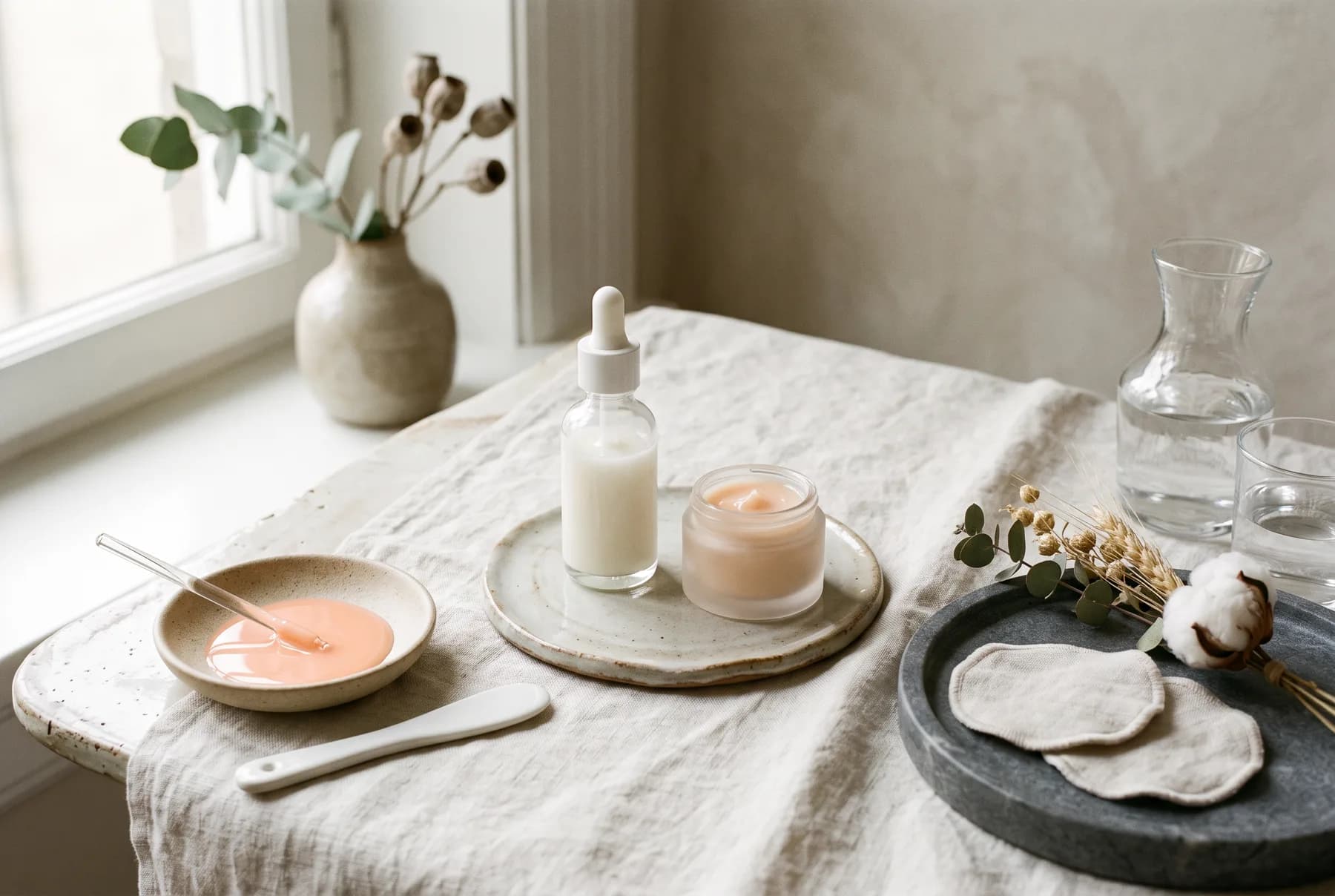
Sunscreen should not be the product you tolerate; it should be the product that makes the whole routine workable. When you wear makeup, the formula’s set time, sheen, tint, and texture are practical buying criteria. A fluid that feels weightless may be ideal under a light base, while a creamier formula can suit a pared-back complexion day.
Tinted SPF adds a useful option to the daytime wardrobe. It can provide a softly even-looking finish and may be particularly attractive when pigmentation is a concern. The tradeoff is simple: tint introduces shade matching, and the finish will influence what foundation, concealer, or blush textures feel best on top.
| Sunscreen format | Best suited to | Makeup behavior to consider | Shopping question |
|---|---|---|---|
| Lightweight fluid | People who prefer little weight or a quicker-setting feel | Often easier to layer under a complexion product | Does it settle comfortably without making skin feel dry? |
| Lotion or cream | Those wanting more cushion from the final step | Can create a soft, moisturized canvas | Does it stay smooth under makeup rather than feeling overly rich? |
| Tinted SPF | Minimal-makeup days or a lightly evened complexion | Can stand alone or act as a first complexion layer | Is the shade and finish right for you? |
| Physical-filter formula | People who prefer this route when chemical filters feel reactive | Finish can vary widely, so texture matters | Does the formula feel comfortable enough for daily use? |
How to layer before makeup
Thin layers are the difference between a polished morning and a balled-up, patchy base. You do not need a long pause between every product, but each layer should have enough time to absorb rather than mingle wetly with the next one. Treat sunscreen as your last skincare step, then move into makeup.
- Apply your serum in a thin, even layer, if you are using one.
- Follow with moisturizer when needed and let the surface feel comfortably settled.
- Apply broad-spectrum SPF 30–50 as the final skincare step.
- Add primer only if it improves the finish or wear of your makeup, then apply complexion products.
Choose by climate, exposure, and your actual morning
A routine can shift without becoming inconsistent. The same core steps work across seasons, but the textures that make sense on a muggy commute may not be the ones you crave in a dry office or on a cold, windy morning. Let your environment guide the finish you buy.
Daily sun exposure matters, too. If your day includes time outdoors, driving, walking, or sitting near daylight, broad-spectrum sunscreen remains the anchor. On days when your schedule is packed, a routine with fewer layers may be the most realistic way to make SPF application feel automatic.
- Humid or hot conditions: Consider water-light serums, gel-creams, and a sunscreen with a lighter finish.
- Cool, dry, or heavily air-conditioned spaces: A light lotion or cream under sunscreen can make the routine feel more comfortable.
- Outdoor-heavy days: Keep the pre-SPF steps lean so you are more likely to apply sunscreen without hesitation.
- Makeup days: Select sunscreen first, then build the serum and moisturizer around its finish—not the other way around.
This is also where value becomes clearer. You do not need every category in its most elaborate form. Spend your attention on a gentle cleansing option you will use, one treatment only if it agrees with your skin, and a broad-spectrum SPF 30–50 that fits your climate and makeup habits.
The morning routine mistakes that cost you comfort
Most frustrating AM routines are not caused by a lack of products. They come from layering too many formulas with competing finishes or treating sunscreen as an afterthought. Edit first, then add only what solves a specific daytime need.
Skip if your skin is signaling less is more
The following are reasons to simplify, not reasons to hunt for another three-step fix.
- Skip vitamin C when your skin is reactive, and use niacinamide or no treatment step instead.
- Skip a separate moisturizer when your skin feels comfortable with your sunscreen alone; add it back when comfort calls for it.
- Skip eye cream unless you enjoy its role in your routine or want its particular texture around the eyes.
- Skip primer when your sunscreen already provides the finish your makeup needs.
Keep these rules in place
A compact routine still benefits from a few guardrails. They preserve the order of operations and make it easier to tell which formula is not working for you.
- Apply products from thin to thick so watery serums are not trapped beneath heavier textures.
- Let active products absorb before layering the next formula.
- Apply sunscreen last in your skincare routine, before makeup.
- Prefer physical blockers if chemical filters feel reactive for you.
Related reading
- Normal Skincare Routine: Simple, Flexible Steps
- Best Skincare Routine for Oily Skin: Daily Guide
- Best Skincare Routine for Dry Skin: Layering Guide
Frequently asked questions
Do I need cleanser in a good morning skincare routine?
Not necessarily. A gentle cleanse is useful when you wake up oily, sweaty, or want a fresh starting point; a water rinse can work when your skin feels comfortable.
Is vitamin C necessary in the morning?
No. It is an optional antioxidant step for a brightening-focused routine. If you are sensitive or reactive, niacinamide or no serum is the simpler choice.
Should moisturizer go before sunscreen?
Yes, when you use moisturizer. Apply it after your serum and before sunscreen; sunscreen is the final skincare step before makeup.
Is tinted sunscreen enough for a makeup day?
It can be a practical option when you like its coverage, shade, and finish. Consider it according to how it wears with the rest of your makeup, rather than assuming every tint replaces a complexion product.
Sources
- Skin Cancer Foundation
- Doctor Rogers
- Cleveland Clinic
Clear guidance, checked before publication.
Solvi articles are structured by our editorial team and reviewed for clarity, consistency, and responsible health language. We update pages when guidance or product information changes.

Sofia Marin
Skincare Routine Editor. Sofia refines the order, timing, and purpose of skincare routines so they stay practical and easy to adjust.