Best Night Moisturizer for Sensitive Skin: A Barrier-First Guide for Mature, Dry, and Combination Skin


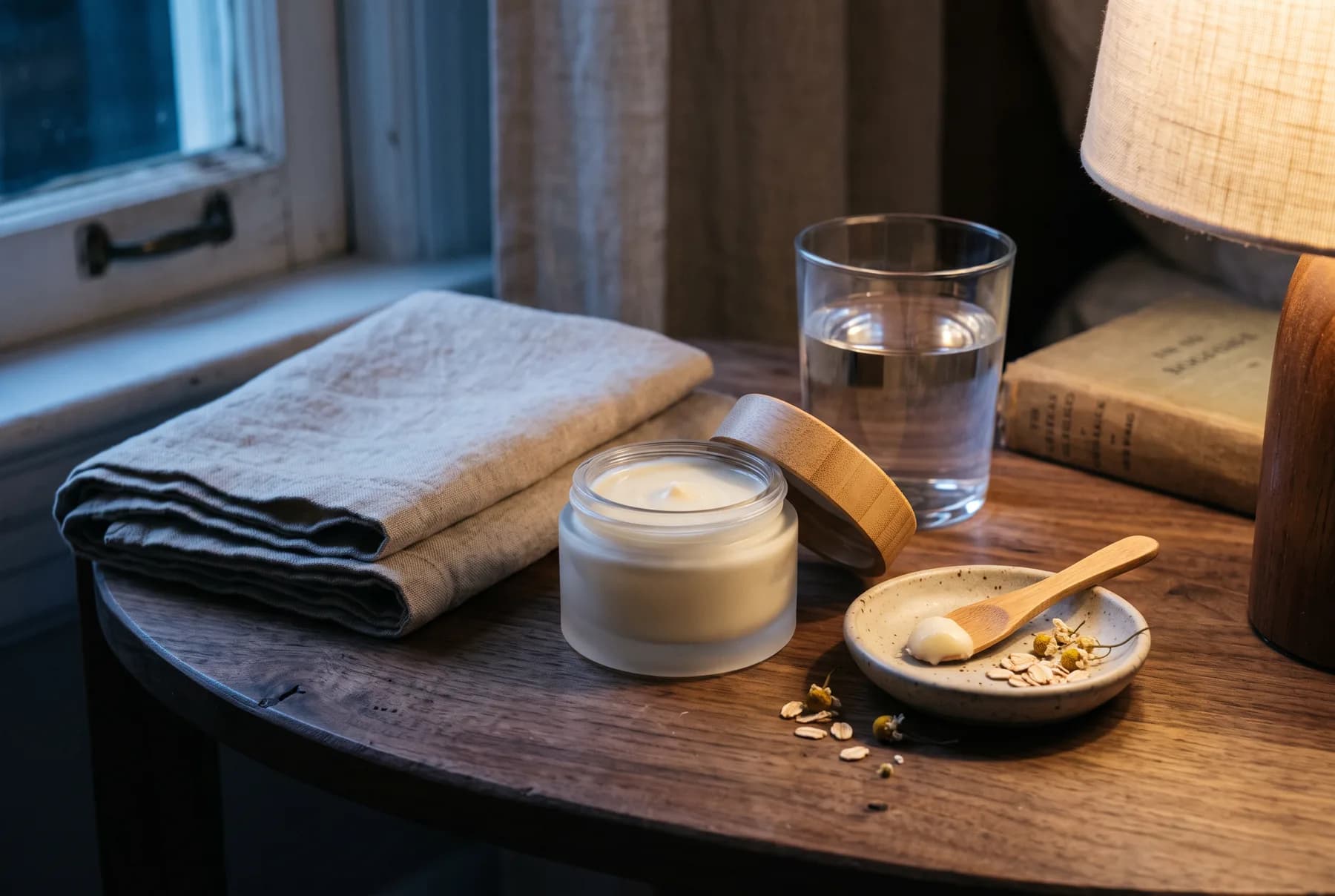
The best night moisturizer for sensitive skin is a fragrance-free, barrier-supporting formula with humectants and a texture that feels comfortable through the night. For mature skin, that often means a richer cream with ceramides and cholesterol; for combination sensitive skin, a lighter gel-cream can deliver hydration without the coated feeling.
The real distinction is not “night” on the label. It is whether the formula helps skin feel less tight after cleansing, avoids common irritation triggers, and fits alongside the rest of your evening routine. A good pick should make bedtime skincare quieter—not turn it into an experiment in redness, stinging, or congestion.
Start with the sensitive-skin night moisturizer checklist
Sensitive skin can react to a product’s fragrance, a crowded active-ingredient list, or simply too much product layered at once. Mature skin can add another requirement: enough cushion to soften the dry, papery feeling that may become more noticeable overnight. Begin with the formula, then let texture make the final call.
- Look for barrier-focused ingredients such as ceramides and cholesterol.
- Prioritize humectants, including glycerin and hyaluronic acid, to draw hydration into the skin.
- Consider calming ingredients such as panthenol or bisabolol when your skin tends to feel reactive.
- Keep the formula fragrance-free and relatively simple, particularly during a sensitivity flare.
- If you have a history of clogged pores or breakouts, look for a non-comedogenic formula and favor a lighter finish over a waxy, heavily occlusive feel.
A product can be rich without being the right rich. The goal is a flexible, comforting finish that leaves skin supple in the morning—not a dense film that feels hot, greasy, or difficult to wash off. That distinction matters especially if your cheeks are dry but your chin and forehead are prone to congestion.
Choose your night texture
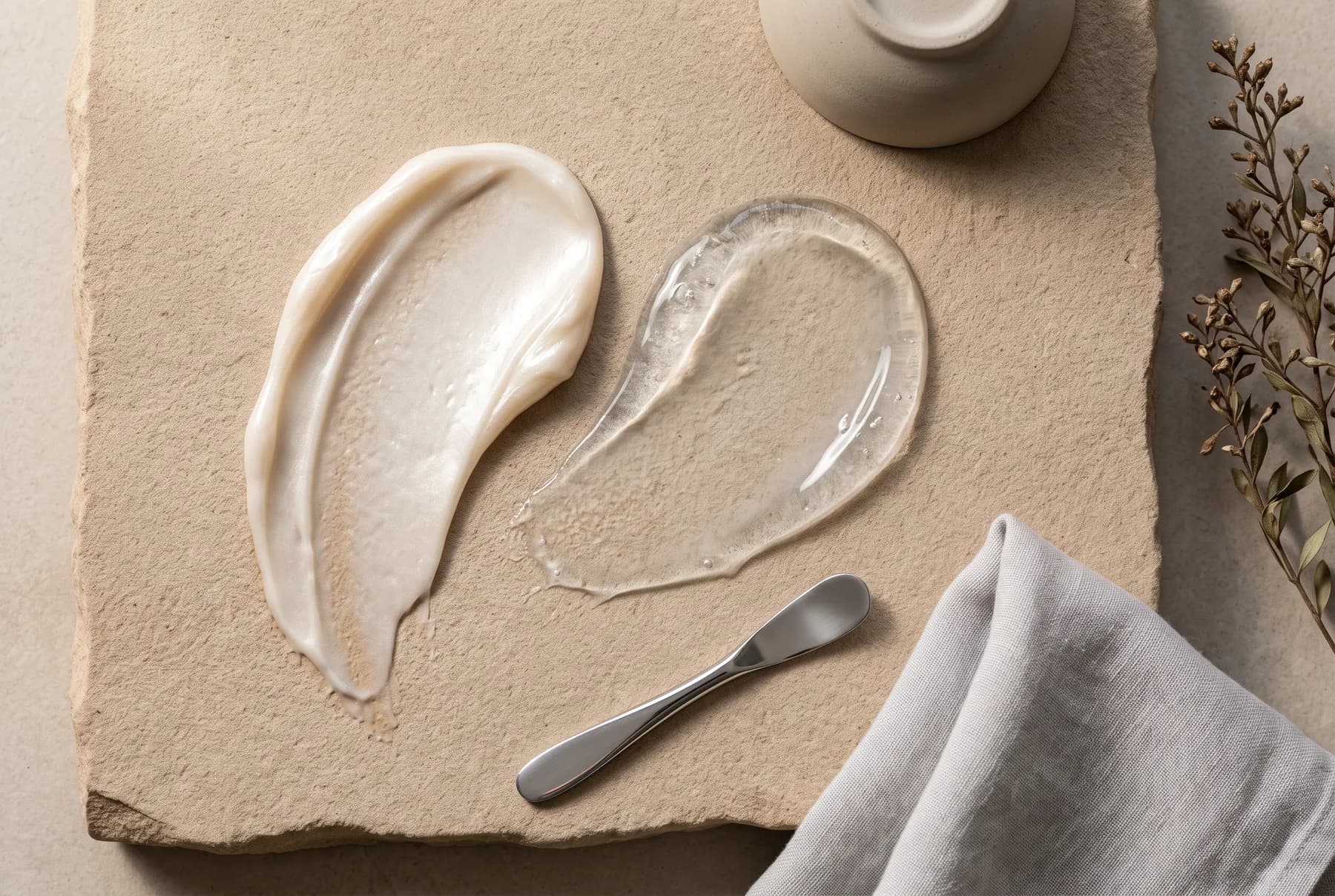
Cream versus gel is the practical fork in the road. Think of it less as a trend decision and more as a nightly climate adjustment: the drier, tighter, or more mature your skin feels, the more likely a cream is useful. If you are sensitive and combination, a breathable gel-cream can be the more sustainable choice.
| Night moisturizer format | Best suited to | What it feels like | Main tradeoff |
|---|---|---|---|
| Rich barrier cream | Mature, dry, tight-feeling sensitive skin | Plush, cushioning, often more protective | May feel too heavy on an oily T-zone or breakout-prone areas |
| Medium-weight cream | Normal-to-dry sensitive skin | Soft, comforting, easier to layer | May not be enough during very dry periods |
| Gel-cream | Combination or oily-leaning sensitive skin | Cool, light, water-based feel | Can feel insufficient on dry cheeks or in dry indoor air |
| Targeted layering | Combination skin with dry zones | Customized: lighter overall, more cream where needed | Requires restraint so the routine does not become overly complicated |
A richer texture is not reserved for dry skin alone. Mature skin often appreciates one because it can feel more cushioning over areas where tightness is most obvious, including the cheeks and around the mouth. But if your skin gets shiny or congested overnight, apply a smaller amount there and reserve the richer layer for dry zones.
Rich cream, gel-cream, or targeted layering?
Choose a richer cream when
A barrier cream is the strongest format candidate when skin feels tight immediately after cleansing, makeup has started to catch on dry areas, or your face feels less comfortable as the evening goes on. Look for ceramides and cholesterol in a fragrance-free base, then assess whether the formula settles down rather than sitting heavily on top.
- Your cheeks, neck, or jawline regularly feel dry by morning.
- You have mature skin and want a more cushioned nighttime finish.
- You use a gentle, minimal evening routine and need the moisturizer to do most of the comfort work.
- Cold weather, indoor heating, or over-cleansing tends to leave your skin feeling stripped.
Choose a gel-cream when
Gel-creams can be a smart compromise for sensitive combination skin. They tend to bring a lighter, fresher feel, making them easier to tolerate over the T-zone while still delivering humectant hydration. The key is not to mistake a refreshing first impression for sufficient overnight moisture.
- Your forehead and nose become oily or feel smothered by dense creams.
- You are prone to clogged pores and prefer a non-comedogenic option.
- You want hydration but dislike a slippery or waxy finish on your pillow.
- Your skin is only dry in selective areas, not uniformly dry.
Choose targeted layering when
You do not need one texture everywhere. Apply your lighter moisturizer across the face, then press a small amount of a richer barrier cream over dry cheeks, around the mouth, or along the neck. This approach is especially useful when mature-skin dryness and an oily T-zone coexist.
Shop by formula, not hype
When shopping commercially, package language can make nearly every moisturizer sound restorative. A more useful filter is the ingredient brief: barrier support, humectant hydration, low-irritation positioning, and a texture you will actually use consistently. “Night cream” is helpful shorthand, but it should not outweigh the formula itself.
These examples are starting points to compare against your own texture needs, not a claim that one jar is universally best. CeraVe Skin Renewing Night Cream is a formula example to consider if ceramides and peptides appeal to your routine. La Roche-Posay’s Toleriane Ultra Night range is relevant to shoppers seeking a sensitive-skin-focused nighttime option, while Bioderma Sensibio offers soothing sensitive-skin night options to explore.
| Formula direction | Who may prefer it | What to review before buying | Value lens |
|---|---|---|---|
| Ceramide-and-peptide night cream | Mature or dry sensitive skin seeking a richer finish | Whether the texture is comfortable across your whole face | A good fit if it can replace extra layers rather than add to them |
| Sensitive-skin night moisturizer | Reactive skin that benefits from a minimal routine | Fragrance-free status and the overall simplicity of the formula | Worthwhile when it reduces routine guesswork |
| Soothing sensitive-skin cream | Skin that feels easily unsettled or tight | Whether it is a cream, balm, or lighter emulsion | Buy the format that fits your climate and T-zone, not just the promise |
Do not choose based on “anti-aging” language alone. For mature sensitive skin, dependable hydration and a comfortable barrier-supportive formula are often more useful than a crowded list of aggressive actives. The most elegant result is skin that feels calm enough to keep the routine consistent.
Build a low-drama night routine

Night moisturizer works best when the steps beneath it are not constantly challenging your skin. If you are testing a new cream, simplify your routine for a few evenings so you have a clearer read on comfort and delayed sensitivity. Keep the quantity modest: more product is not automatically more hydration.
Evening routine
- Cleanse with a gentle cleanser and use lukewarm rather than hot water.
- Apply any well-tolerated, uncomplicated hydrating layer if you use one.
- Smooth your night moisturizer over slightly damp skin, starting with dry areas and using less on the T-zone if needed.
- If certain areas still feel dry, press a second thin layer onto those zones rather than applying a thick coat everywhere.
Allow the moisturizer to be the final word on most nights. If you are introducing a new product, use it gradually and watch for changes that develop later rather than relying only on the first five minutes after application. Sensitivity is often easier to manage when changes are slow and the routine remains legible.
If you use a retinoid
Retinoids can be useful in some routines, but sensitive skin benefits from caution around layering. Avoid placing a retinoid directly under a heavy occlusive cream unless you already know that combination is well tolerated. On retinoid evenings, choose the most familiar, fragrance-free moisturizer in your lineup and avoid debuting another active at the same time.
- Introduce a new night cream on non-retinoid evenings first.
- Keep the rest of the routine stable while assessing tolerance.
- Pull back if skin begins to sting, burn, or feel increasingly uncomfortable.
- Favor a basic barrier-focused moisturizer over adding multiple treatment layers.
The mature sensitive-skin adjustment
Mature skin may need a more substantial nighttime texture because dryness and loss of comfort can be more apparent, but richer should not mean indiscriminate. The best nighttime moisturizer for mature sensitive skin is often a cream with barrier ingredients and humectants, used in a quantity that feels nourishing rather than occlusive.
Pay attention to where your skin asks for more. The cheeks and mouth area may want a second pass, while the center of the face may prefer a thin veil. This selective application creates the polished comfort of a richer night cream without forcing every area into the same finish.
Signs your current moisturizer may be too light
- Skin feels tight again soon after application.
- Dry areas look less smooth by morning.
- You repeatedly add more hydrating layers but still lack a cushioned finish.
- Your cheeks feel comfortable only after using far more product than intended.
Signs it may be too heavy
- Your skin feels warm, coated, or overly slick at bedtime.
- You wake with more congestion in areas that are usually oily.
- The product stays on the surface instead of settling into a comfortable finish.
- You avoid using it regularly because the texture feels unpleasant.
What to skip when skin is feeling reactive
When your skin is unsettled, the most useful move is usually subtraction. A new night cream is difficult to evaluate if it arrives alongside an exfoliant, a stronger treatment, fragrance-heavy products, or several new serums. Give your barrier-focused moisturizer a clean stage.
- Fragranced formulas if fragrance has ever been a sensitivity trigger for you.
- Several new products introduced in the same week.
- Heavy occlusive layering over retinoids unless you know your skin tolerates that pairing.
- A dense all-over balm if your skin is acne-prone and the finish consistently feels congesting.
This is not an argument against every active or every rich cream. It is a case for sequence and fit. Once your skin is comfortable with a basic nighttime moisturizer, you can make better decisions about what, if anything, deserves a supporting role.
Related reading
- Best Moisturizers for Mature Skin: Formula Guide
- Moisturizer for Dry, Sensitive, Acne-Prone Skin
- Hyaluronic Acid Serum for Sensitive Skin
Frequently asked questions
What is the best ingredient profile for a sensitive-skin night moisturizer?
Prioritize a fragrance-free formula with ceramides and cholesterol for barrier support, plus humectants such as glycerin or hyaluronic acid. Panthenol and bisabolol are also worth considering when you want a calming ingredient profile.
Is a rich night cream better for mature sensitive skin?
Often, but not automatically. A richer cream can better suit mature skin that feels dry or tight, while a medium-weight cream or gel-cream may be more comfortable if you are combination, oily-leaning, or congestion-prone.
Can sensitive acne-prone skin use a night moisturizer?
Yes, but texture and formula matter. Seek fragrance-free, non-comedogenic options and use a lighter gel-cream or a targeted application strategy if dense creams repeatedly feel too heavy on your T-zone.
How long should I give a new night cream before deciding it works?
Introduce it gradually and keep your routine otherwise steady, since sensitivity can be delayed. If discomfort, stinging, or increasing irritation develops, stop using the product and return to a routine you know your skin tolerates.
Sources
- La Roche-Posay Toleriane product information
- CeraVe night cream information
- Bioderma guidance on sensitive skin
Clear guidance, checked before publication.
Solvi articles are structured by our editorial team and reviewed for clarity, consistency, and responsible health language. We update pages when guidance or product information changes.

Maya Bennett
Senior Beauty Editor. Maya is the skincare obsessive who turns big beauty questions into clear, grounded guidance. She is especially interested in routines that respect real skin, real schedules, and realistic budgets.