Best Concealer for Oily Skin: A Finish-First Guide to Coverage That Stays Put



The best concealer for oily skin is typically a lightweight, oil-free liquid or cream formula with medium-to-full coverage, a matte or natural-matte finish, and a long-wear or transfer-resistant claim. The formula matters, but the application matters nearly as much: use thin layers, then press powder only where shine tends to break through.
The goal is not to make the whole face look flat. It is to keep concealer anchored over the T-zone, around blemishes, and beneath the eyes while preserving enough flexibility that it blends into real skin instead of sitting on top of it.
How to choose the best concealer for oily skin
Start with the finish, then work backward to coverage and format. A velvet-matte liquid is often the most versatile place to begin: it can diffuse redness and discoloration without the thick, waxy feel that may encourage slipping on an oily complexion.
Words such as *oil-free*, *non-comedogenic*, *long-wear*, and *transfer-resistant* are useful shopping filters, especially if you are prone to clogged pores or need makeup to hold up through a long day. They are not interchangeable promises, however. Check the formula’s finish, texture, shade options, and how it is designed to be applied before deciding it is the right match.
| What to assess | Why it matters for oily skin | What to look for |
|---|---|---|
| Finish | Excess sheen can make coverage appear to move or fade | Matte, soft-matte, velvet, or natural-matte |
| Formula base | Rich oils can feel too emollient for some acne-prone or oily routines | Oil-free and, when relevant, non-comedogenic labeling |
| Wear claim | A formula intended to adhere can be useful for blemish coverage | Long-wear or transfer-resistant claims |
| Coverage | More pigment can mean fewer layers—but also a greater risk of texture | Medium buildable or full coverage in a thin texture |
| Powder compatibility | Setting is often the difference between fresh and patchy | A formula that does not seize or go dry when lightly powdered |
| Shade range | Precise spot concealing looks more seamless | A close skin-tone match plus undertone options |
The finish test
A true matte can be useful over active shine zones, but it may look dry under the eyes if the area is dehydrated. A natural-matte formula is the middle path: less reflective than a radiant concealer, yet not so powdery that it emphasizes every blink line.
Before committing, consider where the concealer will work hardest. Your under-eye area, nose, chin, forehead, and individual blemishes do not necessarily need the same finish or coverage level.
- Choose soft matte for a polished, low-shine everyday look.
- Choose natural matte when you want a less flat effect around the eyes.
- Choose a more decisively matte formula for the center of the forehead, sides of the nose, chin, and spot coverage that tends to break apart.
- Choose medium coverage first if your priority is a flexible, skin-like result; build only where discoloration remains visible.
The label and ingredient lens
Silicone-based liquids can create a smooth, thin film that helps pigment spread across skin, while silica and kaolin are commonly used in makeup and powder products for an oil-absorbing, soft-focus effect. These ingredients are clues, not a guarantee of performance; the formula as a whole and your prep still determine how makeup settles.
If blemishes and congestion are part of the picture, non-comedogenic labeling can be a worthwhile criterion. It is also sensible to be selective with fragrances and richer oils if you already know your skin reacts poorly to them.
Choose your concealer format
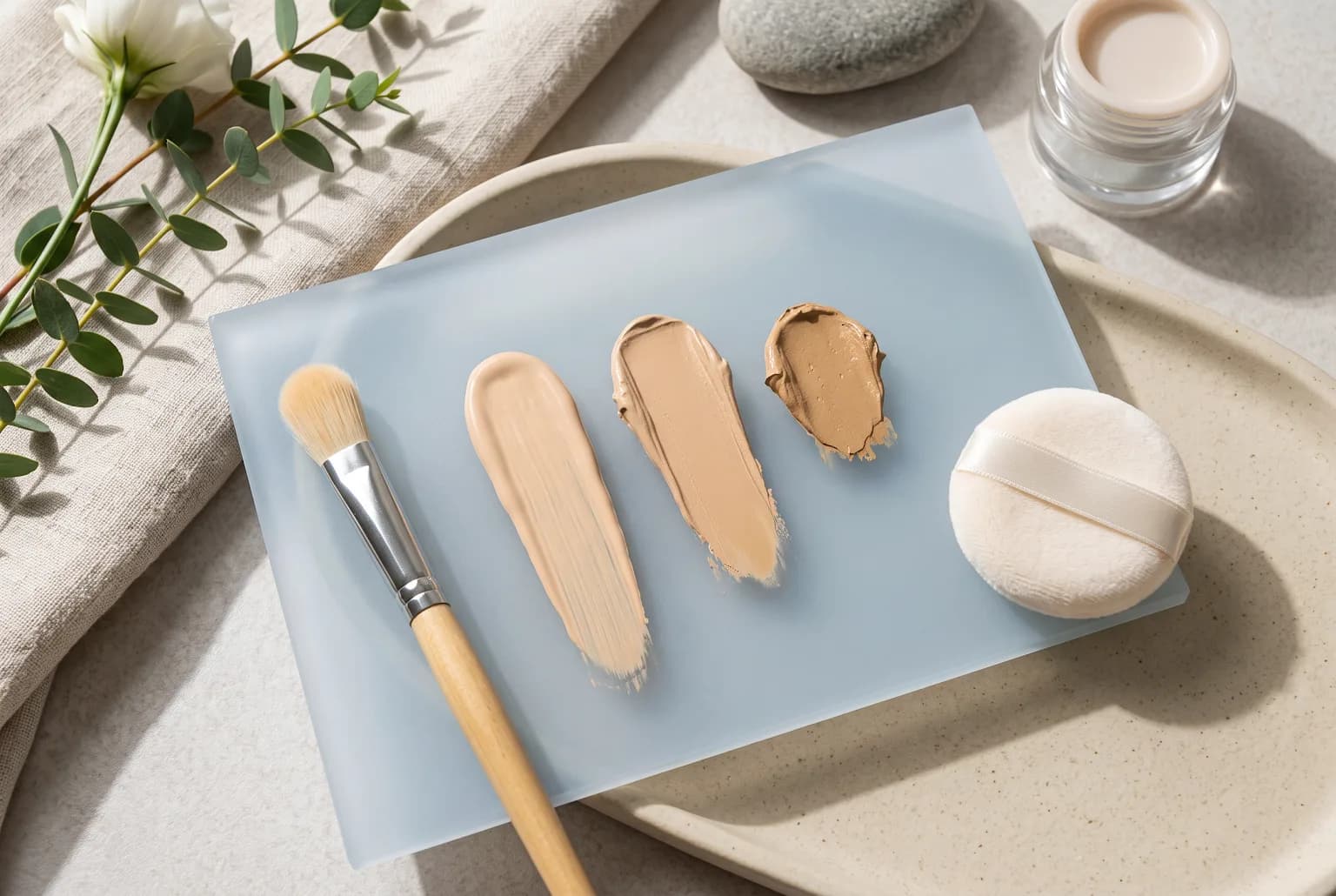
There is no universal best concealer format for oily skin. Liquid, stick, and cream-to-matte formulas each solve a different coverage problem, and the right choice depends on whether you are brightening, spot concealing, or correcting areas where oil comes through first.
Matte liquid concealer
A matte liquid is the all-purpose choice for many oily skin routines. It is usually easiest to sheer out, can be built in controlled passes, and tends to pair naturally with loose translucent powder. Look for a lightweight texture rather than a formula that dries down so fast that blending becomes difficult.
Best for:
- Under-eye brightening with medium or buildable coverage.
- Redness around the nose and chin, where a flexible film is helpful.
- Anyone who wants one concealer that can handle both broader and targeted placement.
Skip if:
- You need extremely opaque coverage from one tiny dot and dislike building layers.
- You prefer a waxier formula for very exact marks.
- Your eye area is dry enough that a strongly matte liquid consistently catches on texture.
Cream-to-matte stick concealer
A cream-to-matte stick gives you placement precision. Touch it directly to a small mark, then feather the perimeter with a fingertip, tiny brush, or sponge. Its firmer feel can be helpful for targeted coverage, though a heavy hand may leave a thicker edge that becomes obvious as skin produces oil.
Best for:
- Individual blemishes, dark marks, and small areas of redness.
- Quick touch-ups that require less broad blending.
- People who prefer to control exactly how much product leaves the applicator.
Full-coverage long-wear cream or liquid
High-pigment, long-wear formulas can make sense when discoloration is more pronounced or when you want the most polished effect in photographs. The tradeoff is that a dense formula has less room for error: too much can crease under the eyes, catch on flaking spots, or look heavier as the day goes on.
Use it in a micro-layer, especially on oily zones. If the first pass is still visible after it dries down, add a second pinpoint layer rather than immediately applying a thick swipe.
| Format | Texture and placement | Strongest use | Main tradeoff |
|---|---|---|---|
| Matte liquid | Fluid, blendable, easy to spread thinly | Everyday under-eyes and redness | May need a second layer for stubborn marks |
| Cream-to-matte stick | Firmer, direct, localized | Blemishes and dark marks | Can appear heavy if applied broadly |
| Full-coverage long-wear | Dense pigment, often quick-setting | Events, photos, pronounced discoloration | More likely to cake when overapplied |
The oily-skin concealer routine
A concealer can be technically long-wearing and still slide if it is layered over fresh sunscreen, rich moisturizer, or an oily primer that has not settled. The fix is not automatically more powder. It is giving each thin layer a moment to mesh with the one beneath it, then setting strategically rather than indiscriminately.
Morning
Keep skincare and sunscreen in the mix, but let them form an even base before complexion makeup. If oil is a regular concern, an oil-control primer can be focused on the areas that become shiny first rather than applied thickly across the entire face.
- Apply your morning skincare and sunscreen, then allow the layers to settle before makeup.
- Press a small amount of oil-control primer onto the nose, chin, forehead, or other high-shine areas if you use one.
- Apply concealer in small dots or a short stroke; avoid coating the whole under-eye or blemish in one pass.
- Blend by pressing with a sponge, fingertip, or small brush until the outer edge disappears into skin.
- Let the concealer sit briefly, then press loose translucent powder over the zones that crease or turn shiny.
- Finish with setting spray if it suits your makeup routine, keeping the mist light so the base is not rewetted.
Under the eyes
Oily skin can coexist with a dry-feeling under-eye area, so treat this zone as its own category. A natural-matte, medium-coverage liquid often gives more flexibility here than the most aggressively matte spot concealer.
Use less than you think you need and concentrate pigment at the inner corner or darkest portion rather than drawing a large triangle. Then press a small amount of powder where creasing occurs; a thick veil of powder can make the finish look more obvious, not more secure.
On blemishes and dark marks
Match the concealer as closely as possible to your skin tone for a disguised spot, rather than using a noticeably brighter shade. Start with a tiny amount at the center, tap only the border outward, and leave the center comparatively undisturbed so you do not lift the coverage you just placed.
Mistakes that make concealer slip
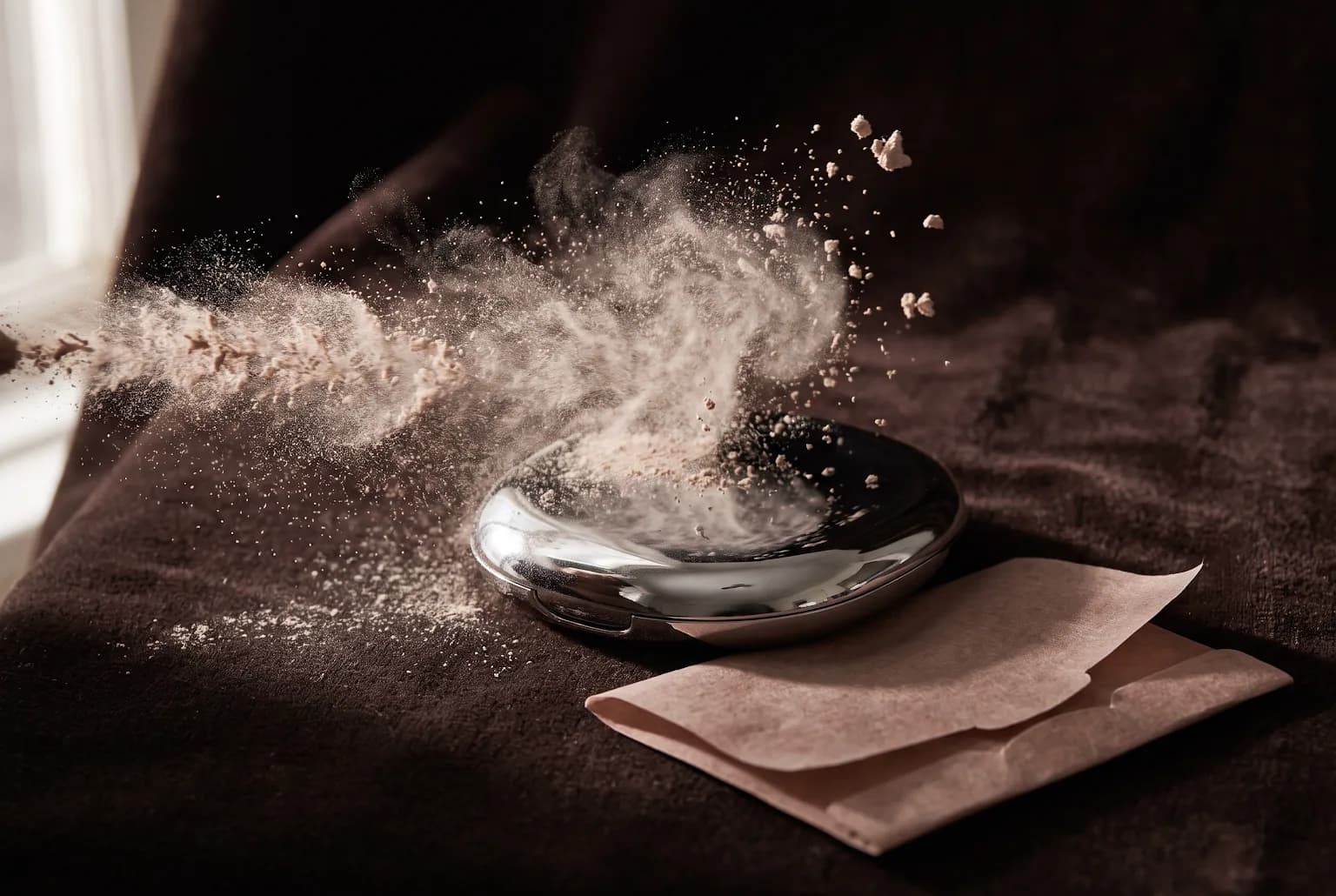
When concealer disappears from the nose or turns patchy on the chin, the culprit is often layering—not necessarily the concealer itself. A few small adjustments can make a lightweight formula look more even than a heavier one applied all at once.
- Applying concealer over skincare or sunscreen that is still visibly wet or slippery.
- Using a rich, luminous base beneath a matte concealer in the oiliest areas of the face.
- Applying too much at once, then blending until pigment and base makeup are lifted away.
- Setting every area with a heavy powder layer, including zones that do not need it.
- Using a bright under-eye shade to cover a blemish, which can make the spot look more conspicuous.
- Touching up shine by repeatedly adding concealer instead of blotting oil first and then making a small repair if needed.
For midday maintenance, blot first. Once surface oil is reduced, assess whether coverage is actually missing; if it is, tap on the smallest possible amount and press it in rather than rubbing across the existing base.
A better touch-up kit
The most useful touch-up products are small and specific. A powder puff can press—not sweep—translucent powder onto the T-zone, while blotting papers can remove shine without immediately adding another layer of texture.
- Blotting papers for surface oil.
- A compact or loose translucent powder with a small puff.
- A small clean brush or mini sponge for edge-blending.
- Your spot concealer only if coverage has genuinely worn away.
Value questions to ask before you buy
A good concealer for oily skin is not simply the one with the highest coverage claim. It is the one whose finish, applicator, and setting behavior make you likely to use the appropriate amount. A less expensive liquid that wears smoothly in a thin layer may offer better value than a dense formula that requires constant correction.
When comparing options, use these criteria rather than relying on a single broad “matte” label:
- Does the formula identify itself as oil-free or non-comedogenic if those features matter to your skin?
- Is the finish matte, soft matte, or natural matte—and does that suit the zone where you will wear it?
- Is the coverage buildable, or is it designed to be full coverage immediately?
- Does it have a long-wear or transfer-resistant claim that aligns with your day-to-day needs?
- Can you find a close shade match with the right undertone for spot concealing?
- Does the applicator encourage precise dots and thin layers, or is it better for broad placement?
Read reviews for recurring comments about creasing, shade oxidation, blend time, and powder compatibility, not only whether a reviewer calls it “full coverage.” Individual skin chemistry, climate, skincare, and application technique can all change how a formula performs, but those details make reviews more useful than a simple star rating.
Related reading
- Best Face Powder for Oily, Acne-Prone Skin
- Best Serum for Oily Skin: Choose by Concern
- Best Skincare Routine for Oily Skin: Daily Guide
Frequently asked questions
What finish is best for concealer on oily skin?
Matte, soft-matte, and natural-matte finishes are often the most practical because they reduce the appearance of excess shine. Choose natural matte under the eyes if a fully matte finish tends to look dry there.
Should oily skin use powder over concealer?
Usually, a light press of loose translucent powder on high-shine or crease-prone areas can help. Focus on the nose, chin, forehead, blemish coverage, and under-eye crease rather than applying a thick layer everywhere.
Is full-coverage concealer good for oily skin?
It can be, especially for targeted discoloration, provided the formula is applied sparingly. High coverage in a thick layer is more likely to look cakey or separate as oil comes through.
How do I stop concealer from separating around my nose?
Allow skincare and sunscreen to settle, use a small amount of oil-control primer if desired, apply concealer in a thin layer, and press powder onto the area. Avoid rubbing while blending, which can move product around the creases of the nose.
Sources
- Allure
- NBC News Select
- The Beauty Radar
Clear guidance, checked before publication.
Solvi articles are structured by our editorial team and reviewed for clarity, consistency, and responsible health language. We update pages when guidance or product information changes.

Maya Bennett
Senior Beauty Editor. Maya is the skincare obsessive who turns big beauty questions into clear, grounded guidance. She is especially interested in routines that respect real skin, real schedules, and realistic budgets.