Melasma vs hyperpigmentation: a practical guide to diagnosis and treatment


Melasma is a patterned, UV- and hormone-linked form of hyperpigmentation that usually needs strict photoprotection and often prescription therapy. "Hyperpigmentation" is the umbrella category that includes post‐inflammatory hyperpigmentation (PIH), sunspots, and other localized melanin excess caused by injury or inflammation; many of those respond to topical retinoids, exfoliation, and azelaic acid.
This guide explains how to tell them apart, what to look for when you buy treatments, and the tradeoffs between over‐the‐counter actives, tinted mineral SPF, and prescription options. If you're shopping, decide first whether the marks have a patterned, centrofacial distribution and known hormonal triggers (lean melasma pathway) or whether they're spotty scars from acne, irritation, or injury (PIH pathway). Matching cause to treatment is the single best way to avoid wasting time and to reduce relapse.
Etiology and triggers that separate melasma and PIH
This difference matters because it changes prevention strategy: melasma patients need broad-spectrum and visible-light protection every day, while many PIH cases improve by removing the inflammatory driver and using cell-turnover actives.
Diagnosis begins with a clinical exam and pattern recognition. Melasma typically appears symmetrically across the cheeks, forehead, upper lip, or chin in a centrofacial or malar distribution; PIH is usually patchy and corresponds to prior insult. A Wood’s lamp exam or dermatoscopic assessment can help differentiate epidermal from dermal pigment when clinically appropriate; that helps predict response to topical therapy, but these tests are interpretive and should be done by a clinician.
Typical distribution and pattern differences

Distribution is one of the clearest decision points. Melasma tends to be bilateral and diffuse: soft-edged brown patches across the cheeks, bridge of the nose, and forehead. The pattern is often symmetric because systemic factors and light exposure affect broad zones. PIH looks different: you’ll see discrete marks where acne lesions, insect bites, or trauma occurred, and the borders can be sharper or follow the shape of the injury.
Texture and depth matter. Epidermal pigment sits closer to the surface and generally responds faster to topical brighteners, whereas dermal pigment appears slate‐brown or grayish and is slower to treat. In practice, many people have mixed patterns. If you see both symmetric patches and isolated darker spots, treat by layering strategies—target the background pattern (melasma) with photoprotection and maintenance agents, and address individual PIH spots with targeted actives or spot treatments.
How clinicians confirm melasma vs hyperpigmentation
Clinical confirmation is a stepwise process: history, visual pattern, and selective testing. Start with a focused history: timing relative to pregnancy or new hormones, sun habits, and whether lesions fluctuate with seasonal UV or oral contraceptives. A Wood’s lamp exam can accentuate epidermal pigment and help separate epidermal from dermal involvement; however, it doesn't identify hormonal drivers and is only one element of the exam. If the pattern is classic (centrofacial, symmetric), clinicians often make a working diagnosis of melasma and discuss photoprotection and treatment intensity.
When to escalate: if marks fail reasonable topical therapy or if they’re deeply dermal, clinicians may discuss prescription hydroquinone regimens, triple combination creams (tretinoin + hydroquinone + steroid), or procedural options. Importantly, most prescription pathways require monitoring for irritation and relapse risk. For non‐patterned PIH, the diagnostic emphasis is on identifying and removing the inflammatory source—stopping irritant products, treating active acne, or spacing procedures—then introducing cell‐turnover and pigment‐modulating actives.
Sun protection: why melasma needs more than SPF
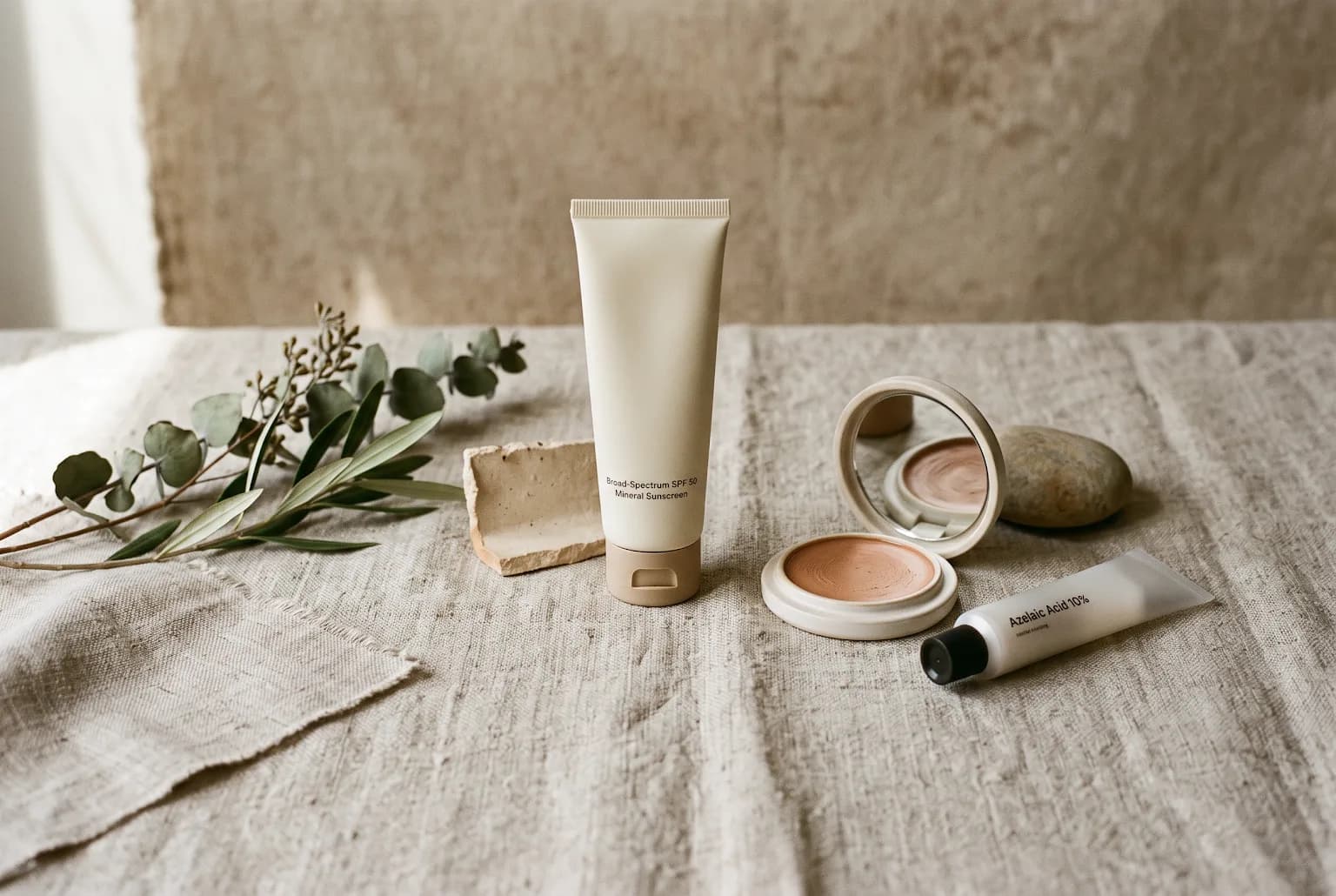
Sun protection is the foundation for both melasma and PIH, but melasma demands extra vigilance. Because melasma responds to both UV and visible light, tinted mineral sunscreens that include iron oxides provide added visible‐light protection and reduce recurrence. Broad‐spectrum physical blockers (zinc oxide, titanium dioxide) are often preferred for melasma prevention because they reflect and scatter light. For PIH, daily SPF remains essential, but the clinical emphasis is often on preventing further inflammation that causes new marks.
Practical tradeoffs: a tinted mineral sunscreen gives better cosmetic wear and visible‐light protection but can feel heavier on oily skin. Lightweight chemical SPFs are cosmetically pleasant and work well for many PIH cases, but they offer less barrier against visible light. Reapply every two hours in strong sun, and pair SPF with behavior—hats, shade, and avoiding peak UV—to reduce both melasma activation and new PIH.
Topical therapies: matching actives to the condition

Choosing a topical starts with the diagnosis. For melasma, higher‐intensity pigment modulators are often needed: prescription hydroquinone is a longstanding option, and triple combination creams (tretinoin + hydroquinone + steroid) are commonly used under supervision. Azelaic acid at higher concentrations (15–20%) is also a melasma‐focused choice for many patients who need a non‐hydroquinone alternative. Over‐the‐counter brighteners such as vitamin C, niacinamide, and alpha hydroxy acids can help but are rarely sufficient alone for persistent melasma.
For PIH, first‐line choices include topical retinoids (which accelerate cell turnover), azelaic acid 10–15%, and gentle chemical exfoliation (glycolic or lactic acid). These approaches reduce the residual pigment by promoting epidermal renewal and dispersing melanin. Decide on texture and layering: light serums and gels layer well under SPF; richer creams help dry skin tolerate retinoids. If you’re building a routine, start with one active at a time and allow skin to adapt before adding another.
| Condition | Best first-line topical options | Texture considerations |
|---|---|---|
| Melasma (patterned) | Prescription hydroquinone or triple therapy; azelaic acid 15–20% | Creams or lotions that layer under SPF; avoid stripping cleansers |
| PIH (post-inflammatory) | Retinoids; azelaic acid 10–15%; chemical exfoliants | Gels/serums for oily skin; creams for dry, sensitive skin |
When to consider prescription and in‐office procedures
Escalate when pattern pigment is persistent, rapidly recurring, or deeply dermal. Prescription hydroquinone and triple‐combination creams can deliver meaningful improvements but require clinician oversight for duration and monitoring. Laser and light procedures can help selected patients, but they must be matched to pigment depth: some lasers are effective for epidermal pigment, while others risk worsening hyperpigmentation if misapplied—especially in darker skin types.
Decision criteria for escalation include failure of a well‐executed topical regimen, significant psychosocial impact, and accurate assessment of pigment depth (Wood’s lamp, dermoscopy, or gradual response to topicals). Procedural tradeoffs: faster results versus cost, potential downtime, and relapse risk. Discuss realistic expectations with a clinician and prioritize maintenance post‐procedure (daily tinted mineral SPF and topical maintenance) to reduce rebound.
Long-term maintenance and relapse risk
Melasma behaves like a chronic condition with a higher relapse risk than most PIH. Even after improvement, melasma can return with new hormonal shifts or UV exposure. That means maintenance is not optional: daily tinted mineral SPF, ongoing light‐protective habits, and periodic use of maintenance topicals (azelaic acid, low‐strength retinoids, or intermittent brighteners) help keep pigment suppressed. Treating melasma is often about control rather than cure.
For PIH, once the inflammatory driver is managed and the lesion fades, maintenance focuses on preventing new insults—managing acne, avoiding aggressive procedures on pigmented skin, and using gentle actives. Value decisions: if cost or tolerance limits therapy, prioritize SPF and one proven topical (retinoid for PIH; azelaic acid or clinician‐recommended prescription for melasma) as your baseline.
Frequently asked questions
What is the main difference between melasma and post-inflammatory hyperpigmentation?
Melasma is typically symmetric, hormone‐linked, and triggered by UV and visible light; PIH follows a localized injury or inflammation such as acne and is patchier. The difference matters because melasma often requires stricter photoprotection and sometimes prescription therapies, while PIH commonly responds to retinoids, azelaic acid, and gentle exfoliation.
Can over-the-counter products treat melasma effectively?
Over‐the‐counter brighteners (vitamin C, niacinamide, AHAs) can help mild pigmentation but are rarely sufficient for classic melasma. Melasma often needs stronger, clinician‐guided options—higher‐concentration azelaic acid, prescription hydroquinone or triple therapy, and strict tinted mineral SPF to reduce relapse.
How does visible light affect melasma and what sunscreen should I pick?
Visible light—especially blue and violet wavelengths—can worsen melasma by stimulating pigment. Tinted mineral sunscreens containing zinc oxide or titanium dioxide with iron oxides offer additional visible‐light protection. For practical guidance, see our guide on choosing a tinted SPF for melasma Best Sunscreen for Melasma: Why Tinted SPF Is the Smartest Daily Buy.
When should I see a dermatologist for hyperpigmentation?
See a clinician if the pattern suggests melasma, marks are deep or resistant after a consistent topical trial, or if you’re considering prescription agents or lasers. A provider can confirm depth, recommend prescription options like hydroquinone or triple therapy, and match procedural choices to pigment depth and skin type.
Related Reading
- Laser Treatment for Dark Spots: The Smart Way to Match the Laser to the Pigment
- The Best Treatment for Hyperpigmentation on the Face Is a Layered, Low-Irritation Plan
- Treatment for Dark Spots on Face: A Smart, Stepwise Plan That Starts With SPF
Sources
- American Academy of Dermatology — Melasma: diagnosis & treatment
- Allied Academies review — melasma vs hyperpigmentation (comparative overview)
- Wikipedia / Melasma overview (clinical features & management summary)
Clear guidance, checked before publication.
Solvi articles are structured by our editorial team and reviewed for clarity, consistency, and responsible health language. We update pages when guidance or product information changes.

Iris Kim
Advanced Skincare Writer. Iris happily gets lost in retinoids, peptides, face oils, and emerging actives. Her goal is to make advanced skincare feel considered and understandable instead of intimidating.