The best daytime moisturizer for mature skin: smart picks and how to choose


Choose daytime moisturizers for mature skin that combine hyaluronic acid and peptides with a finish that layers under sunscreen or foundation. Look for lightweight textures, barrier lipids such as ceramides or squalane, and antioxidant support; decide whether you want built-in SPF or a formula intended to sit comfortably under a separate sunscreen.
How to choose a daytime moisturizer for mature skin
The simplest answer is to pick a formula that meets three needs: reliable hydration, daytime active support (peptides and antioxidants), and a compatible texture for whatever comes next — sunscreen, primer, or makeup. Mature skin often benefits from humectants like hyaluronic acid (HA) to pull moisture in, emollients like squalane to soften, and barrier lipids such as ceramides to reduce transepidermal water loss. During the day, antioxidant ingredients help defend against environmental stressors.
Consider lifestyle and priorities: if you wear makeup daily, texture and non-pilling performance matter more than heavy occlusives. If sensitivity is a concern, fragrance-free, low-irritant formulas and clear guidance about layering with actives are priority decision criteria. The rest of this guide breaks down those tradeoffs, what to inspect on the label, and how to match format to preference.
Key ingredients and why they matter
Start with three ingredient families and their practical effects: humectants, barrier lipids, and actives for daytime support. Humectants such as hyaluronic acid draw and hold moisture; they give immediate plumpness and help foundation sit on smoother skin. Barrier lipids — ceramides, cholesterol, and squalane — repair and maintain the skin’s protective layer so hydration lasts through the workday.
Daytime actives differ from night: look for short-chain peptides to support firmness and antioxidants like vitamin C derivatives, niacinamide, or green tea extract for defense against oxidative stress. Peptides are supportive ingredients rather than quick fixes; in daytime products they aim to help the appearance of resilience and tone while still maintaining a light feel.
| Ingredient group | Typical role | What mature skin needs it for |
|---|---|---|
| Hyaluronic acid (HA) | Humectant — attracts and holds water | Immediate plumping; smoother surface under makeup |
| Ceramides & squalane | Barrier lipids — seal and soften | Strengthen barrier to reduce dryness and flakiness |
| Peptides | Signaling molecules — support resilience | Daytime firmness support without strong irritation |
| Antioxidants (vit C, niacinamide) | Neutralize free radicals | Daytime defense against pollution and UV-related stress |
Using this table, prioritize one or two strong humectants plus at least one barrier lipid and a daytime-friendly active. If sunscreen technology is built in, confirm it's broad-spectrum and cosmetically acceptable under makeup. If the moisturizer is SPF-free, choose one that sits well under your sunscreen or opt for a lightweight moisturizer with a separate sunscreen step.
Texture, makeup layering, and common tradeoffs
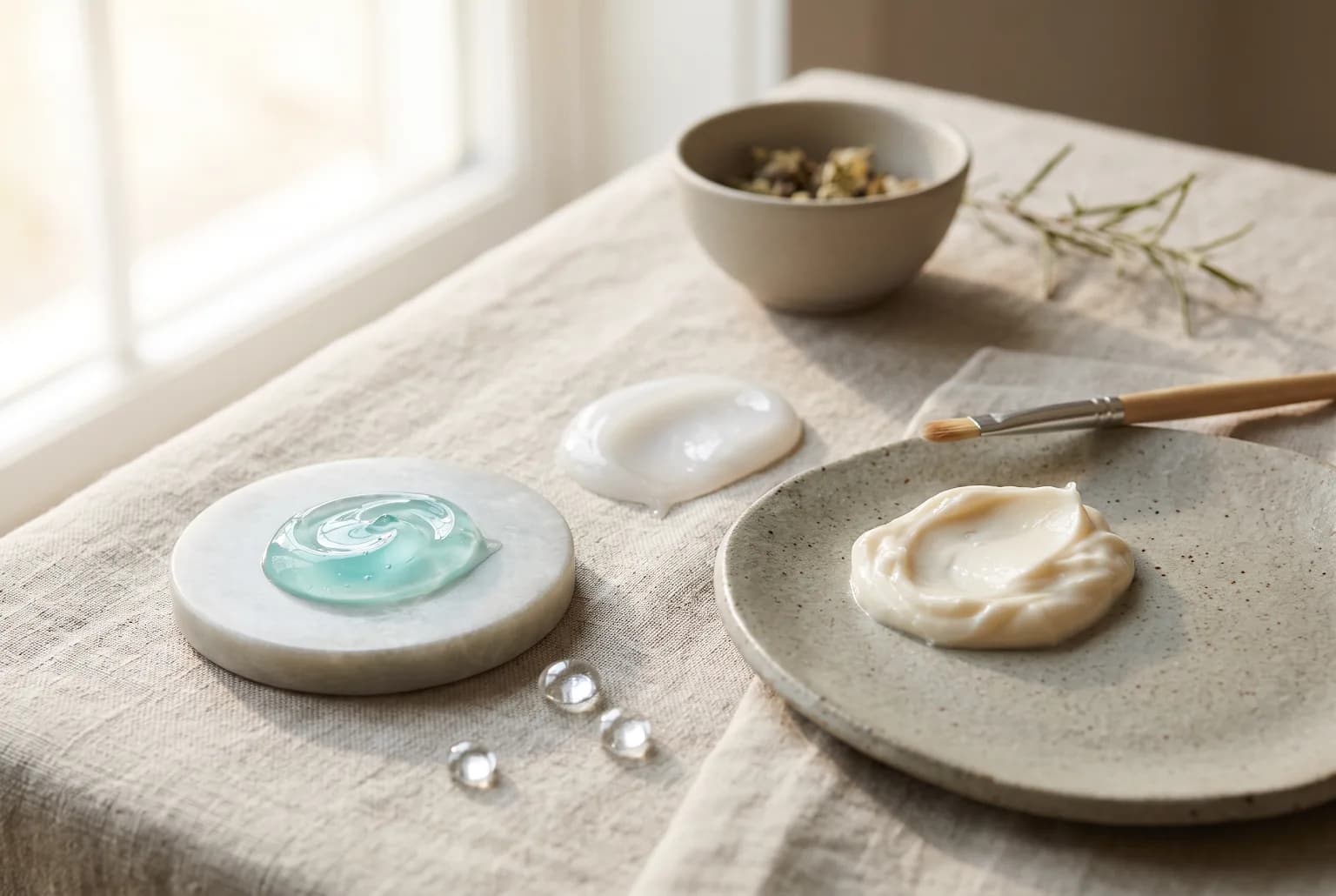
Texture governs how a product behaves under makeup. Gel-creams tend to be lightweight, absorb quickly, and are less likely to pill. Rich creams and balms deliver deeper emollience and are great for very dry mature skin but can feel heavy under foundation or lead to foundation break-up. Lotions and fluid day creams often strike a balance: enough slip to blend foundation but not so much oil that they move makeup.
If you prefer a matte, long-wear makeup finish, avoid thick occlusives like petrolatum-based balms during the day. Instead, seek formulas containing squalane or lightweight esters that smooth without adding shine. For sensitive mature skin, fragrance-free and minimal-excipient formulas reduce the chance of irritation when layering with actives or sunscreen.
Common layering approaches and their tradeoffs:
- Moisturizer with built-in SPF: simplifies morning steps but may limit sunscreen choice and reapplication approach during the day. Built-in SPFs range in finish; test for compatibility under your foundation.
- Moisturizer + separate sunscreen: offers maximum control — pick the moisturizer for hydration and texture, then use a cosmetic sunscreen you trust for protection and reapplication.
- Moisturizer as primer: some day creams double as makeup primers; they should explicitly say "makeup-friendly" or "non-pilling." Tradeoff: multifunction formulas can compromise on peak performance in one area.
Routine examples by skin type and priority
Below are routine frameworks tailored to common mature-skin priorities. Each is a template — adjust order and products based on personal sensitivity and prescriptions. The goal is to show how moisture, active support, and sun protection fit together.
- Hydration + makeup-ready (normal to combination)
- Gentle hydrating cleanser
- Lightweight hyaluronic serum (optional)
- Gel-cream with HA + peptides (moisturizer)
- Broad-spectrum sunscreen (if moisturizer has no SPF)
- Primer and foundation as usual
- Extra barrier support (very dry or flaky)
- Cream cleanser that doesn’t strip
- Emollient-rich moisturizer with ceramides and squalane (may be cream or balm texture)
- If wearing makeup: use a lightweight sunscreen and a humectant mist under makeup for touchups
- Sensitivity and rosacea-prone mature skin
- Fragrance-free, low-excipient formulations
- Barrier-first moisturizer (ceramides, cholesterol) applied to damp skin
- Mineral sunscreen tested separately for compatibility under makeup
- Anti-aging active support (daytime focus)
- Antioxidant serum (vitamin C derivative or niacinamide)
- Lightweight peptide-containing moisturizer
- Sunscreen or moisturizer with SPF if cosmetically acceptable under makeup
These examples prioritize different textures and tradeoffs: heavier creams help dryness but can challenge make-up adherence; lighter gel-creams sit well under makeup but may require a richer night cream.
How to read labels and compare formulas
When comparing daytime moisturizers, read for function not marketing. Ingredients are listed by concentration order; the first five to eight ingredients generally indicate the formula’s backbone. Look for humectants (sodium hyaluronate, glycerin), barrier lipids (ceramide 1, 3, 6-II, squalane), and daytime-friendly actives (palmitoyl peptides, tocopherol, ascorbyl glucoside, niacinamide). Avoid assuming "anti-aging" labeling equates to peptide strength or meaningful antioxidant content — check the formula.
Texture clues live in the ingredient list too: heavy emollients or petrolatum near the top suggest a richer finish; water (aqua) listed first with glycerin and dimethicone later suggests a lighter emulsion. If you plan to layer with sunscreen and makeup, test a small patch with your preferred sunscreen and foundation to check for pilling.
For more ingredient-first guidance for mature skin creams, see our buyer’s guide on The best face cream for mature skin: an ingredient-first buyers’ guide and the time-of-day selection framework in Best Moisturizers for Mature Skin: Choose by Barrier, Texture, and Time of Day.
Budget, format, and value: what to consider
Luxury day creams can deliver elevated textures, stabilized antioxidant systems, and refined finishes, but mid‐range brands often include the same functional ingredients (HA, peptides, ceramides) at meaningful levels. Decide whether you value a sensory experience (silkier finish, refined scent) or ingredient concentration and formulation transparency.
Formats to choose from:
- Gel-cream: best for makeup wearers who want quick absorption
- Lightweight lotion: balance between hydration and makeup compatibility
- Rich cream/balm: for very dry or cold climates where barrier protection is essential
A good test of value: does the formula keep skin comfortable for 6–8 hours and layer predictably under your sunscreen and foundation? If the answer is yes for your routine and climate, the product is earning its place in the rotation.
Frequently asked questions
Do I need SPF built into my daytime moisturizer?
You do not have to have SPF built into your moisturizer, but you must use a broad-spectrum sunscreen each morning. Built-in SPF simplifies steps but can limit your sunscreen reapplication strategy and choice of active sunscreen formulation. If you choose a moisturizer without SPF, pick one that layers well under your preferred sunscreen.
Are peptides safe to use in daytime formulas with vitamin C or acids?
Peptides are generally formulated to be compatible with daytime antioxidants like vitamin C derivatives and niacinamide. However, if you use strong prescription actives (retinoids, topical acids), check with your dermatologist for specific compatibility and sequencing recommendations.
Which texture is best under foundation if I have dry mature skin?
A lightweight cream or gel-cream with humectants plus a touch of emollient typically offers the best balance: it hydrates without creating excess oil that can interfere with foundation. For very dry areas, spot-apply a richer cream and blend carefully before applying foundation.
How can I avoid pilling when layering moisturizer, sunscreen, and makeup?
Pilling often results from incompatible silicones, over-application, or incomplete absorption between steps. Apply thin layers, allow time to absorb (one to two minutes for lightweight products), and test combinations on the jawline before committing to a full routine.
Related Reading
- The best eye primer for mature skin: smoothing, hydrating, long-wear picks
- Eye Creams for Mature Skin: A Smarter Way to Choose Your Formula
- Best Facial Toner for Mature Skin: A Barrier-First Buyer’s Guide
Sources
- NBC News Select — best moisturizers for mature skin (derm recommendations) https://www.nbcnews.com/select/shopping/best-moisturizers-mature-skin-rcna347410
- Today — lotions for mature skin (ingredients suggestions) https://www.today.com/shop/best-lotions-for-mature-skin-rcna259896
- Allure — product ingredient context https://www.allure.com/gallery/best-wrinkle-cream
Clear guidance, checked before publication.
Solvi articles are structured by our editorial team and reviewed for clarity, consistency, and responsible health language. We update pages when guidance or product information changes.

Zoe Mitchell
Beauty Trends Editor. Zoe keeps a close eye on viral routines, new launches, and the skincare conversations moving fastest online. She asks which trends are useful, which need context, and which can be skipped.


