Best Shaving Cream for Sensitive Skin: The Low-Irritation Shopping Guide


The best shaving cream for sensitive skin is generally fragrance-free, soap-free, and glycerin-rich, with enough cushion and glide to limit razor drag. If your skin is especially reactive, look for a short, straightforward ingredient list and skip menthol, dyes, and heavily fragranced formulas. The right product matters—but so does using a fresh blade and taking fewer, gentler passes.
For this category, “best” is less about a dramatic lather and more about the film left between skin and blade. Think plush cream, slick clear gel, or a low-foam soapless lotion that stays workable rather than disappearing halfway through a stroke. Dermatology guidance also emphasizes shaving technique, including shaving in the direction of hair growth and avoiding a dull blade.
The quick answer
A fragrance-free glycerin shaving cream is the strongest all-around starting point for dry, easily irritated facial skin. Glycerin is a moisture-binding ingredient, and in a shaving format it can help create the lubricating layer that makes short, controlled strokes feel less grabby.
If you tend to get razor burn around the neck, jaw, bikini line, or underarms, consider a brushless, soap-free cream or low-foam shave lotion. These formats are designed to spread directly from hands, which can be useful when you want slip without a dense, airy lather that obscures where you are shaving.
Clear sensitive-skin shave gel is a practical alternative for anyone shaping facial hair or navigating curves. Its transparent finish makes it easier to see edges, though a gel that dries down quickly may require working in small sections or adding water as you go.
Shop by your sensitive-skin pattern
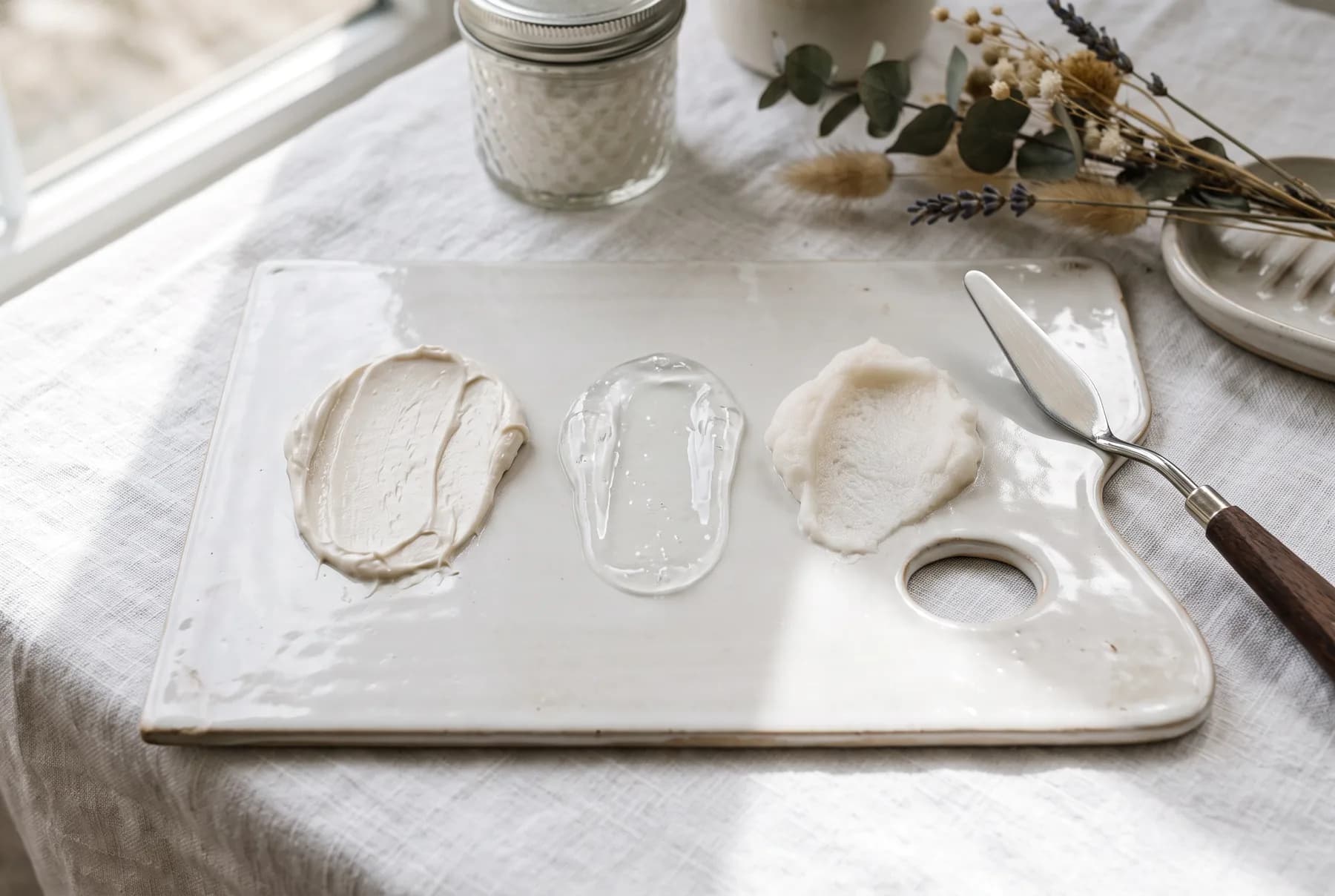
The product category is broad, so shop from the irritation pattern you recognize—not the foam height in a campaign image. A face that feels tight after shaving needs a different texture from a beard line that needs precise visibility or a body area prone to friction.
For dry, tight-feeling skin
Choose a fragrance-free, glycerin-rich cream with a dense, creamy texture. A cream tends to offer more cushion than a very thin gel, which can be welcome when your concern is a dry, stripped feeling after the rinse. Look for a formula that remains slippery with a little water rather than one that turns bubbly and vanishes immediately.
For razor-burn-prone areas
Prioritize a soap-free or brushless formula that creates a consistent lubricating layer. Aloe or colloidal oatmeal are sensible soothing additives to look for if you already know your skin tolerates them. Keep the rest of the formula quiet: a lower-irritant profile is usually more useful than an elaborate list of “cooling” extras.
For beard lines, sideburns, and detail work
A clear, sensitive-skin shave gel gives you sightlines. That is useful when you are tracing around a mustache, beard, or sideburn instead of removing all facial hair. Seek out one labeled non-comedogenic if clogged pores are a concern, and do not confuse transparency with low lubrication—let the glide, not visibility alone, make the final call.
For body shaving
A creamy, easy-spreading formula can make more sense than a small, dense face cream, particularly for legs or larger areas. The skin is still sensitive, but the practical need is coverage and slip across a broader surface. A fragrance-free gel can also work well if you prefer a rinsable texture and do not find gels drying.
| Your priority | Best format to consider | Texture cue | Watch-out |
|---|---|---|---|
| Dryness and tightness | Glycerin-rich cream | Opaque, cushiony, stays slick with water | Strong fragrance or an overly foamy wash-off |
| Razor burn tendency | Soap-free or brushless cream | Low-foam lotion or cream film | Menthol, dye, and ingredients you already react to |
| Detail shaving | Clear sensitive-skin gel | Translucent and easy to spread thinly | Gel that dries before a short section is finished |
| Larger body areas | Cream or gel with easy spread | Fluid enough to cover without rubbing | Scented formulas applied over a wide area |
Cream, gel, or soapless formula: make the texture work for you
There is no universal winner between shaving cream and gel. The best choice is the one that stays lubricating on your skin long enough to complete a small area without pushing you into multiple passes. Start with a texture you can control, then refine around your known triggers.
- Traditional cream: Best when you want a thicker cushion and have dry or tight-feeling skin. It may be applied by hand or built up with a brush, although a brush is optional—not a requirement for a close shave.
- Brushless cream: Best when convenience matters and your skin prefers a simple, low-foam layer. It spreads like a rich lotion and can be easier to use when traveling or shaving at the sink quickly.
- Clear gel: Best for precision around facial hair and contoured areas. Apply a thin, even layer; too much product can make a razor feel as though it is skating instead of cutting cleanly.
- Soapless shave lotion: Best when traditional foaming products leave you feeling parched or stingy. The appeal is the quieter texture: less theatrical lather, more direct slip.
A product does not need a long roster of botanical extracts to be considered sophisticated. For very reactive skin, the most elegant formula may be the restrained one: no added fragrance, no artificial color, no “icy” sensation, and a texture that rinses cleanly without making skin feel squeaky.
Read the label like a sensitive-skin editor
Before you commit to a full-size tube, check the label in a specific order. Start with what is excluded, then look at the formula base, then consider any extras. This avoids buying a product for one appealing ingredient while overlooking a trigger you already know does not agree with you.
- Look for: fragrance-free and dye-free language, plus a glycerin-rich base and, if desired, aloe or colloidal oatmeal.
- Consider carefully: plant extracts, essential oils, and “cooling” additions. They may be fine for some people but are not automatically gentle for a reactive complexion.
- Avoid if you are very reactive: menthol and heavily perfumed formulas; these are unnecessary for a comfortable shave.
- Match the claim to the use: a non-comedogenic sensitive-skin gel may be especially relevant for acne-prone facial areas, while coverage and glide may be more important for legs.
“Unscented” and “fragrance-free” are not interchangeable terms in everyday shopping language, so favor clearly fragrance-free options when fragrance sensitivity is part of your history. If you are uncertain about a new formula, test it cautiously on a small area first rather than debuting it on your entire jawline before an event.
A lower-friction shave routine
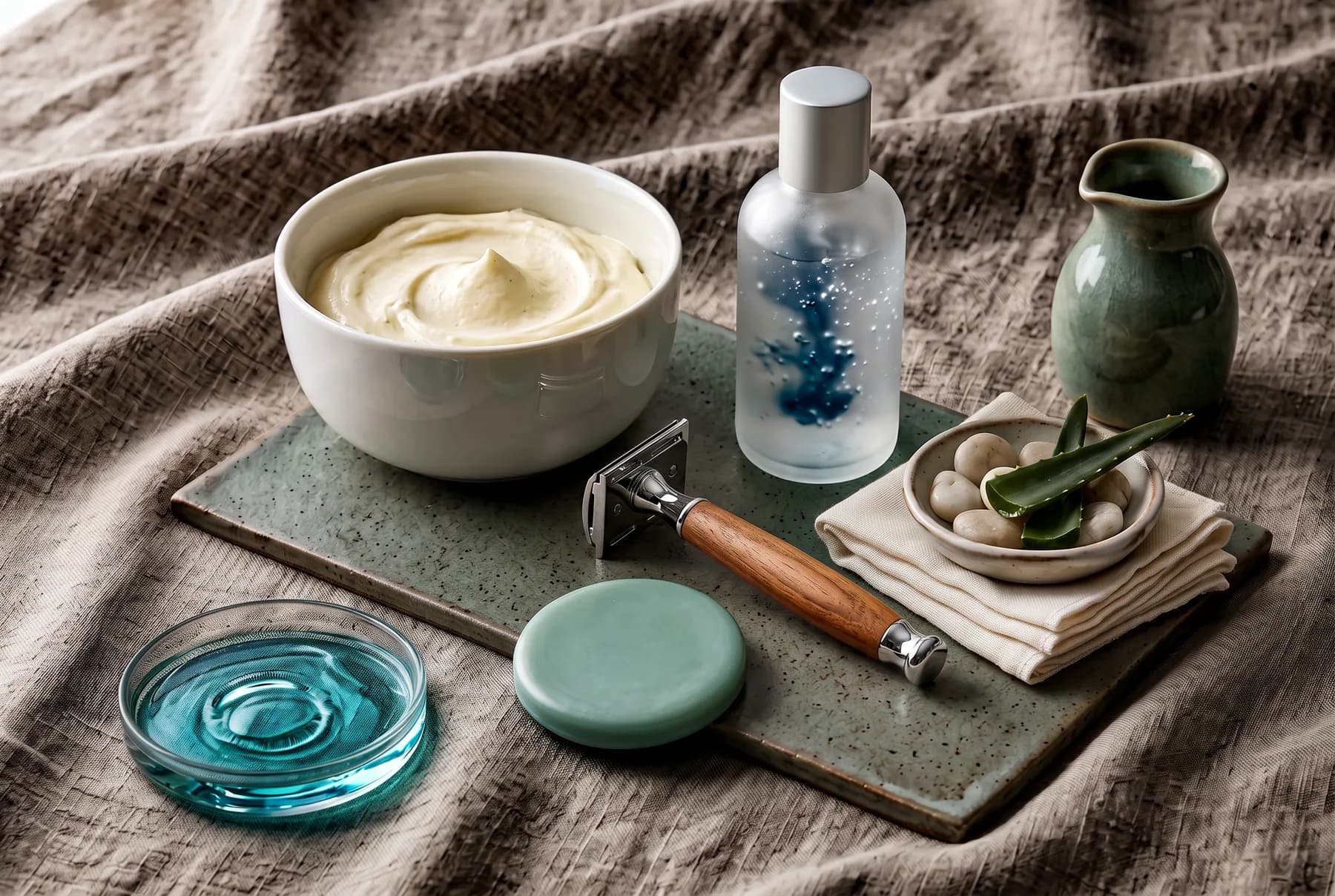
Even an excellent cream cannot entirely compensate for rushed prep, a dull blade, or repeated scraping over the same patch. The American Academy of Dermatology’s shaving guidance supports gentle preparation and shaving in the direction hair grows. Treat your shaving product as one piece of a friction-reduction system.
Morning or whenever you shave
- Soften hair and skin with lukewarm water. Very hot water can feel good in the moment but may be less comfortable for easily irritated skin.
- Apply a thin, even layer of your cream or gel and give it a moment to sit. Add a few drops of water if a cream needs loosening; you want glide, not a thick mask.
- Shave in the direction of hair growth with short strokes and light pressure. Rinse the blade often rather than forcing it through a buildup of hair and product.
- Reapply product before any second pass instead of shaving bare skin. For stubborn areas, changing the angle slightly is usually a better first move than pressing harder.
- Rinse with cool-to-lukewarm water, pat dry, and follow with a simple moisturizer if your skin feels dry.
A pre-shave oil can be an optional add-on when dryness is the major issue, but it is not essential. If you use one, choose a formula you know your skin tolerates and apply only a light layer so the razor does not slip uncontrollably.
Face versus body: do not shop as though the skin is identical
A single fragrance-free formula can be convenient for both face and body, but the job changes by area. Facial hair is often coarser and detail work is more common; body shaving frequently involves more surface area and can include spots where friction from clothing follows soon after.
For the face
Favor precision, a stable layer of slip, and a formula that does not make your routine feel greasy. A dense glycerin cream is a strong option for a full shave, while a clear gel is especially useful for maintaining facial-hair edges. If ingrown hairs or bumps are recurring concerns, avoid repeatedly chasing a closer result with more passes.
For the body
Favor spreadability and a formula that you can apply evenly without friction from your hands. A larger-format cream, shave lotion, or gel may be the most economical choice, depending on how much product you use. After shaving, skip alcohol-heavy aftershave products if they tend to sting your skin.
Common mistakes that make a gentle formula feel harsh
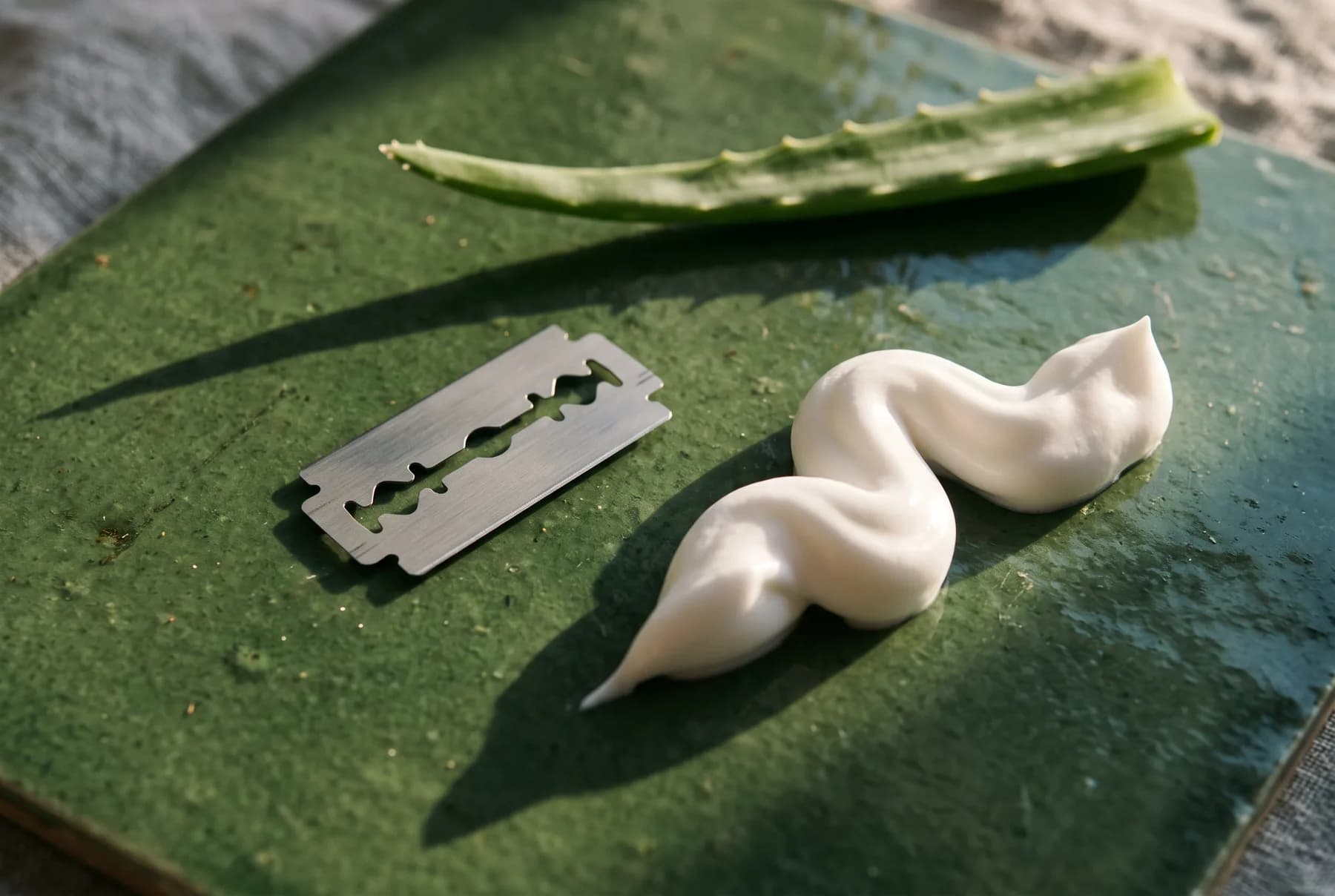
When a product suddenly seems irritating, the formula may not be the sole culprit. Small mechanical issues can change the experience from smooth to scratchy, especially in high-friction zones such as the neck, bikini line, ankles, and underarms.
- Using a tired blade: Tugging encourages pressure and repeat strokes. Swap in a fresh blade when the shave stops feeling smooth.
- Shaving too much area at once: Cream and gel can lose moisture as they sit. Work in smaller sections so the product remains slick.
- Going against the grain immediately: Shaving with the direction of growth is generally the gentler starting point. Reserve any closer pass for skin that is tolerating the routine well.
- Adding a bracing aftershave: An alcohol-heavy splash may feel traditional, but it can be uncomfortable on freshly shaved sensitive skin. Keep the finish simple and moisturizing instead.
- Ignoring a reaction: Stop using a product if it burns or if you develop folliculitis, rather than trying to “push through” with less product or more pressure.
Patch-testing is particularly useful if your skin has reacted to fragrance, plant extracts, or menthol in the past. It is a modest extra step that can save an entire irritated shave day.
Related reading
- Best Face Wash for Sensitive Skin: Gentle Guide
- Best Facial Exfoliator for Sensitive Skin
- Signs of a Damaged Skin Barrier: Clear Checklist
Frequently asked questions
Is shaving gel or cream better for sensitive skin?
Cream is often the better fit for dry, tight-feeling skin because of its cushioning texture. Clear gel can be the better fit for precise beard lines or small areas, provided it stays lubricating rather than drying down too quickly.
What ingredients should sensitive skin avoid in shaving cream?
If you are highly reactive, skip heavily fragranced formulas, dyes, and menthol. Be mindful of plant extracts and essential oils too, particularly if you have reacted to them before.
Is a brushless shave cream good for sensitive skin?
It can be. A brushless, soap-free cream is a useful low-foam option for anyone who wants direct application and a creamy protective layer without building a large lather.
Why does my skin burn after shaving even with sensitive-skin cream?
A dull blade, too much pressure, shaving against hair growth, repeated passes, or an irritating aftershave can all contribute. Reassess the whole routine, not only the shaving cream, and stop a product that causes burning.
Sources
- NBC Select: dermatologist-informed shaving cream guidance
- Allure: shaving creams for sensitive skin
- American Academy of Dermatology: shaving and skin-care guidance
Clear guidance, checked before publication.
Solvi articles are structured by our editorial team and reviewed for clarity, consistency, and responsible health language. We update pages when guidance or product information changes.

Amara Lewis
Sensitive Skin Writer. Amara focuses on calm, barrier-first skincare, thoughtful formulas, and routines that are easier for reactive skin to tolerate.