Fungal Acne vs. Hormonal Acne: The Pattern-First Guide to Choosing the Right Treatment Lane


Fungal acne and hormonal acne can look similar at a glance, but their patterns are usually quite different. Uniform, itchy pinhead pustules that arrive in clusters—especially across the chest, back, forehead, or hairline—fit Malassezia folliculitis, often called fungal acne; deeper, tender pimples around the chin and jawline that seem to cycle with hormones lean more hormonal.
The important distinction is not academic: the treatment lanes diverge. An anti-Malassezia wash may make sense for suspected folliculitis, while a retinoid, benzoyl peroxide, azelaic acid, or clinician-guided hormonal treatment is more relevant for hormonal acne. If the pattern is mixed or unclear, a dermatologist can confirm the cause rather than leaving you to run an expensive, irritating experiment on your face.
The 60-second distinction
“Fungal acne” is a commonly used name for Malassezia (or pityrosporum) folliculitis, an overgrowth of yeast in the hair follicles. It is not the same process as acne vulgaris, which is the umbrella term for what many people mean by conventional or “bacterial” acne. Hormonal acne is acne vulgaris influenced by hormone fluctuations, with a familiar preference for the lower face.
Start with the way the bumps relate to one another. Malassezia folliculitis tends to be monomorphic: the individual bumps look remarkably alike in size and shape. Hormonal acne is usually less orderly, with a changing mix of clogged pores, inflamed papules, and sometimes deeper lesions.
| What to assess | Malassezia folliculitis (“fungal acne”) | Hormonal acne |
|---|---|---|
| Bump pattern | Small, similar-looking papules or pustules in a tight crop | A mixed breakout: clogged pores, red bumps, and potentially deeper spots |
| Sensation | Often itchy | Often tender, sore, or inflamed |
| Common placement | Chest, back, shoulders, upper face, hairline | Chin, jawline, and lower face |
| Timing clue | May flare with oils, occlusion, heat, sweat, or antibiotics | May follow a cyclical hormone pattern |
| Different treatment lane | Anti-Malassezia cleansing or antifungal therapy after confirmation | Acne actives and, when appropriate, prescription hormonal options |
No single clue is a verdict. A jawline breakout can coexist with forehead folliculitis, and an itchy rash can also be contact dermatitis or another condition. Think of these signals as a sorting tool for your next move, not a diagnosis made in a magnifying mirror.
Read the breakout like a pattern
Before changing products, take stock of four specifics: morphology, map, feeling, and timeline. This is more useful than counting blemishes, because a dozen uniform bumps on the upper back tell a different story than three painful chin lesions that recur every month.
- Morphology: Look for sameness versus variety. A field of similarly sized, tiny pustules supports a folliculitis conversation; blackheads, whiteheads, and differently staged inflamed spots point more toward acne vulgaris.
- Map: Note whether the breakout favors the chest, shoulders, back, hairline, and upper face, or concentrates around the jawline and chin.
- Feeling: Track itch, burning, tenderness, and pain. Itch is a meaningful Malassezia clue, while pain and depth are more common concerns with inflammatory hormonal acne.
- Timeline: Record whether it followed heavy oils, a very occlusive product, sweating, or a course of antibiotics—or whether it predictably rises and falls alongside your cycle.
This is also where the “fungal vs. bacterial vs. hormonal acne” search gets less confusing. Hormonal acne is not a separate organism; it describes a hormonal driver of acne vulgaris. Meanwhile, Malassezia folliculitis involves yeast, so piling on standard acne strategies—including antibiotics—may miss the target and can worsen fungal folliculitis.
The ingredient and texture audit
A product audit should be practical, not punitive. You do not need to declare every oil or rich cream forbidden forever, but if folliculitis is on the table, flag heavy, oily, or very occlusive layers introduced before the flare. Coconut oil is one example cited as a product type to avoid when fungal acne is suspected.
- Review face oils, rich balms, hair oils, and leave-in styling products that touch the forehead, neck, shoulders, or back.
- Consider friction and trapped moisture from tight workout clothing, hats, helmets, or a sweaty hairline.
- Note whether a breakout changed during or after antibiotic use, as antibiotics can aggravate Malassezia folliculitis.
- Keep a short photo-and-date record in consistent lighting rather than changing five products in one weekend.
Build a shopping cart by symptom
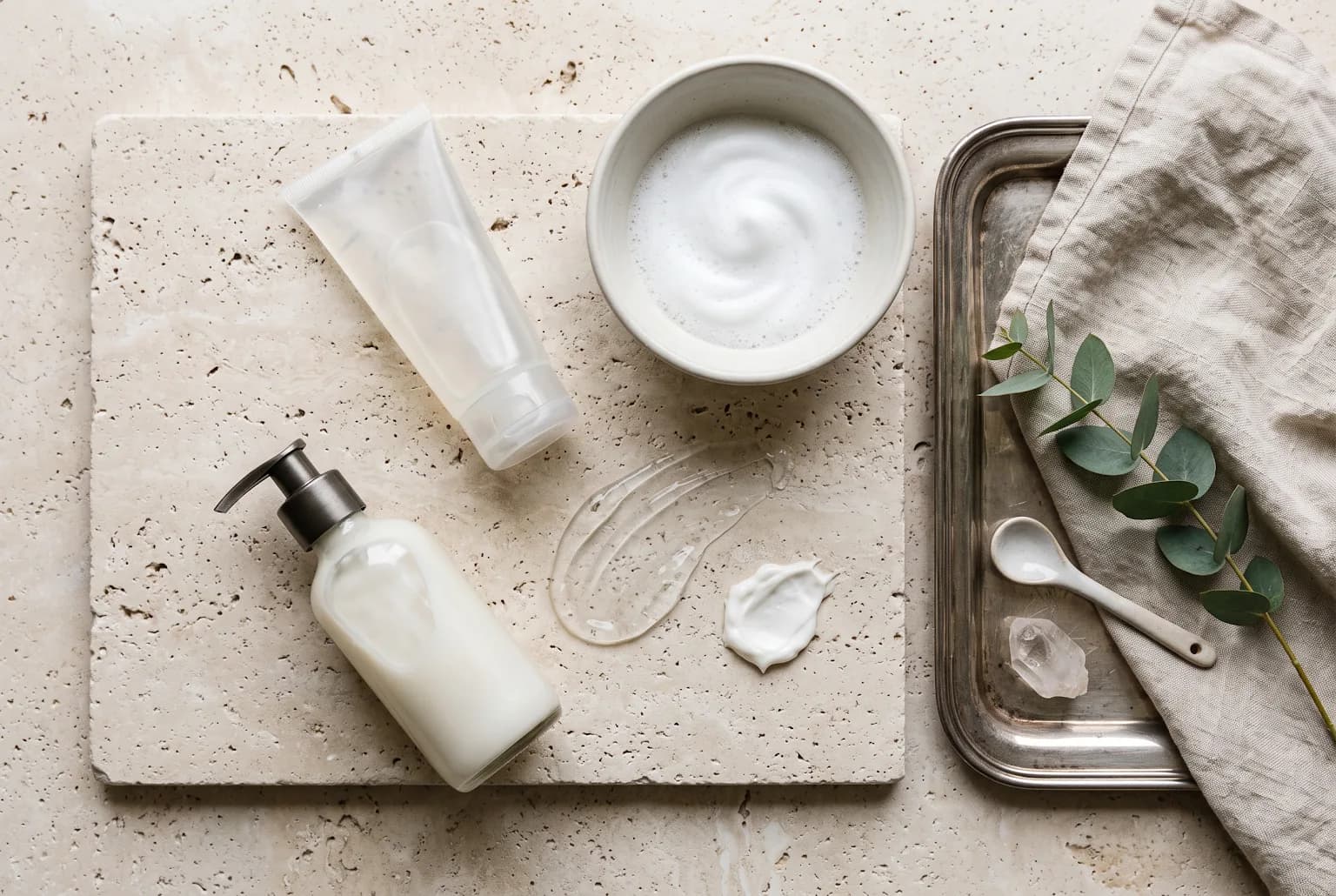
The smartest purchase is usually a format that matches the suspected pattern and the area involved—not the most elaborate routine. For widespread body bumps, a rinse-off cleanser format is often easier to distribute evenly than a tiny spot-treatment tube. For a lower-face acne pattern, leave-on acne actives can be more relevant, provided your skin tolerates them.
If the pattern looks fungal
An anti-Malassezia cleanser can be a sensible adjunct to discuss with a clinician or pharmacist, particularly for a chest, shoulder, or back pattern. Selenium sulfide and ketoconazole shampoos are examples often used as wash-off options; their foam or lather format makes them more practical for broad, hard-to-reach zones than a thick cream.
- Rinse-off shampoo or body wash: Best suited to a widespread body or hairline pattern. Apply only as directed on the product or by a clinician, rinse thoroughly, and follow with a simple moisturizer if needed.
- Topical azole cream: A more targeted format that may be considered for a smaller confirmed area. Its cream texture can be less convenient over a large back or chest area.
- Prescription oral antifungal: A clinician-directed option, such as fluconazole, for confirmed cases where medical treatment is warranted. This is not a self-start category.
- Lightweight, low-fuss moisturizer: Useful when cleansing leaves skin feeling tight; choose the simplest texture your skin accepts while you are narrowing down potential triggers.
If the pattern looks hormonal
For hormonal acne, the useful shopping categories are usually acne treatments with a track record in the lower-face routine: adapalene, benzoyl peroxide, and azelaic acid. Each plays a different role, and a streamlined routine is easier to tolerate and evaluate than a shelf full of overlapping acids.
- Adapalene: A topical retinoid format for an all-over acne-prone area rather than a single surprise spot. Gel versions can feel lighter; cream formats may suit people who prefer more cushion, though individual formulas vary.
- Benzoyl peroxide: A practical choice for inflammatory acne, often available as a wash or leave-on treatment. A wash can be easier for a larger area, while a leave-on is more targeted; either can be drying and may bleach fabrics.
- Azelaic acid: A leave-on cream or gel option that can fit an acne routine when a person wants a non-retinoid active to discuss or try, depending on their needs and tolerance.
- Prescription hormonal treatment: Combined oral contraceptives and spironolactone are options a qualified clinician may consider for hormonal acne. They require an individual medical discussion rather than an online checkout.
For either lane, value is not just price per ounce. A body wash that you can realistically use on your back, a leave-on that layers without pilling under sunscreen, and a formula you can introduce consistently are all better buys than a complicated rotation that makes your skin harder to read.
What not to buy in a panic
Skip the temptation to treat every bump with every active. Strong scrubs, multiple exfoliating acids, a retinoid, and a medicated wash can create irritation that obscures the original pattern—and makes it difficult to know what is helping.
- Avoid using leftover oral antibiotics to “test” whether a breakout is acne; antibiotics can worsen fungal folliculitis.
- Avoid starting oral antifungals or hormonal medication without medical oversight.
- Avoid heavy oils, including coconut oil, when Malassezia folliculitis is suspected.
- Patch test a new leave-on topical, especially if you have reacted to skincare before.
A cautious two-week triage plan

Two weeks is not a deadline for clear skin; it is simply a useful window to simplify your inputs and collect better observations. Do not use it to delay care for painful, rapidly spreading, or distressing breakouts. The objective is a calm, trackable routine that gives a clinician better information if you need one.
Morning
- Cleanse gently, especially if your skin is dry or reactive; a harsh cleanse can add irritation without clarifying the cause.
- Use one treatment only if it is already part of a tolerated plan or appropriate to the suspected lane—do not stack several new actives.
- Apply a straightforward moisturizer if your skin feels tight, then broad-spectrum sunscreen on exposed areas.
- Make a quick note of itch, tenderness, new lesions, sweat exposure, and any product that touched the area.
Evening
- Remove sunscreen and cleanse after sweating or at the end of the day without aggressive scrubbing.
- Use your selected leave-on acne active only as tolerated if hormonal acne is the stronger pattern; reserve anti-Malassezia wash formats for the directions provided by the product or clinician.
- Keep hair oils, rich body products, and new experimental layers away from a suspected folliculitis area while you observe.
- Photograph the same area every few days in similar light, then assess the overall direction rather than judging a single new bump.
This plan is intentionally conservative. It creates a cleaner signal: fewer variables, less chance of contact dermatitis from product overload, and a more useful answer to the question, “What changed?”
When testing beats guessing
A dermatologist can often distinguish these conditions by examining the morphology and distribution, but confirmation matters when the presentation is ambiguous or not improving. For suspected Malassezia folliculitis, KOH testing or a fungal culture may be used to look for yeast. That is particularly valuable before moving to oral antifungals or after a standard acne routine has failed.
Book an appointment sooner rather than later if any of the following apply:
- The bumps are intensely itchy, widespread, rapidly changing, or worsening despite simplification.
- You have painful, deep, or scarring-prone lower-face acne, or breakouts are affecting your quality of life.
- A breakout became worse with antibiotics or has not responded as expected to an acne-focused routine.
- You are considering oral antifungal medication, spironolactone, or combined oral contraceptives.
- You cannot tell whether you are dealing with folliculitis, acne, dermatitis, or a combination.
The best outcome is not necessarily finding a single label. Some people have both a lower-face acne pattern and sweat-associated follicular bumps elsewhere. A clinician can help separate the maps, keep treatment from becoming needlessly aggressive, and decide whether a prescription belongs in the plan.
Related reading
- Best Skincare Routine for Oily Skin: Daily Guide
- Best Serum for Oily Skin: Choose by Concern
- Salicylic Acid Body Wash for Body Acne
Frequently asked questions
Can fungal acne appear on the face?
Yes. Malassezia folliculitis can affect the upper face and hairline, though it is also commonly seen on the chest, back, and shoulders. The combination of uniformity and itch is often more informative than facial location alone.
Does hormonal acne itch?
Hormonal acne is more often described as tender, sore, or inflamed, particularly when lesions are deep. Itch does not establish a diagnosis by itself, but prominent itch alongside many similar small bumps is a reason to consider folliculitis and seek guidance.
Will benzoyl peroxide treat fungal acne?
Benzoyl peroxide is an acne treatment, not an antifungal treatment. If Malassezia folliculitis is the likely issue, anti-Malassezia options and dermatology confirmation are the more relevant path.
Can I use an antifungal shampoo on my face?
Some anti-Malassezia shampoos are used as wash-off products, but facial skin can be sensitive and formulas vary. Follow the product directions and ask a dermatologist or pharmacist before using a medicated shampoo off-label on facial skin.
Sources
- Cleveland Clinic — Fungal acne (Malassezia folliculitis) overview
- Cleveland Clinic — Hormonal acne patient guide
- Prevention — Dermatology articles on fungal acne recognition and treatment
Clear guidance, checked before publication.
Solvi articles are structured by our editorial team and reviewed for clarity, consistency, and responsible health language. We update pages when guidance or product information changes.

Zoe Mitchell
Beauty Trends Editor. Zoe keeps a close eye on viral routines, new launches, and the skincare conversations moving fastest online. She asks which trends are useful, which need context, and which can be skipped.