Best sunglasses shape for a round face: shape, fit, and three examples

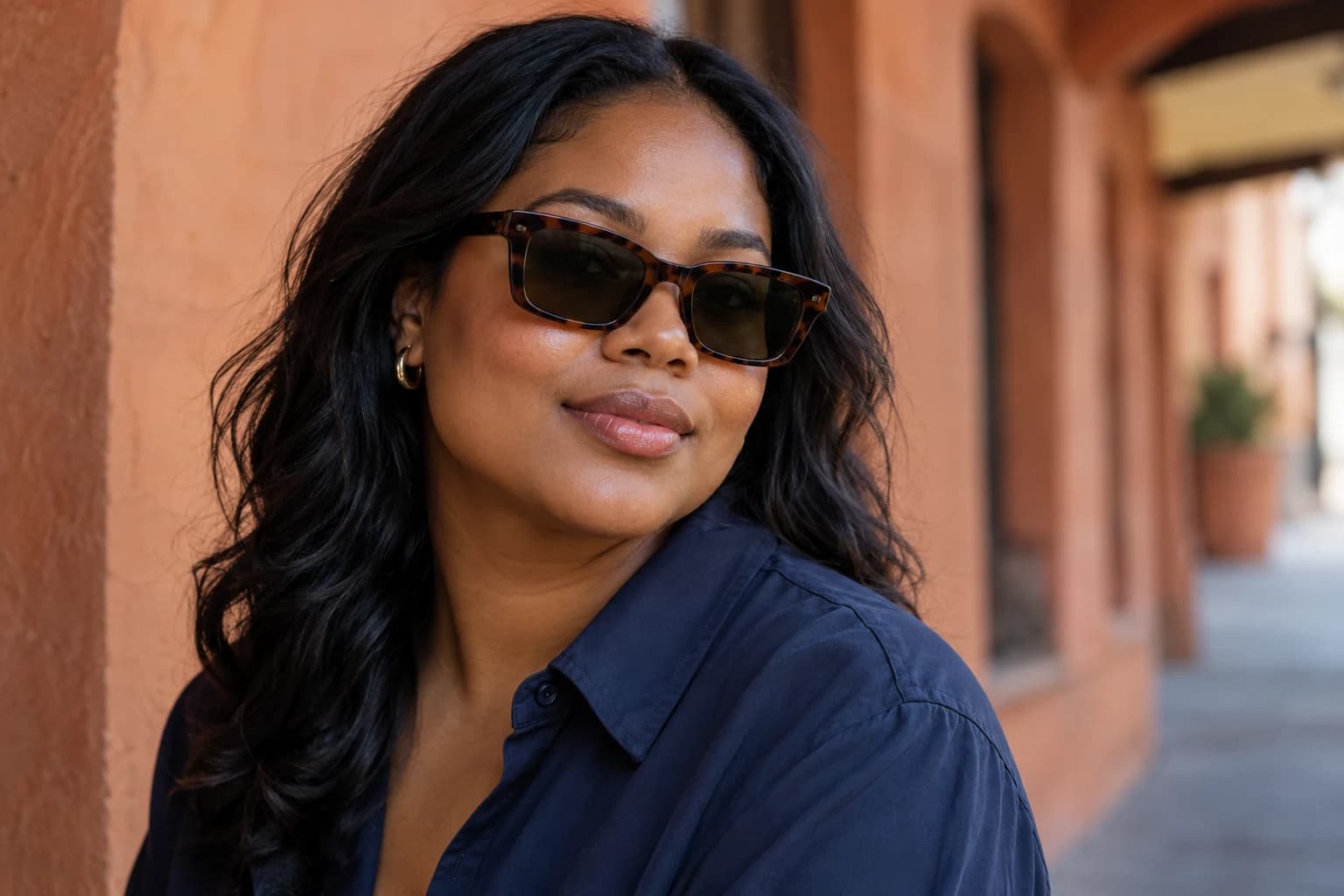
Rectangular, square, and browline sunglasses are useful starting points for a round face if you like contrast between the frame and your facial outline. Ray-Ban Original Wayfarer, Ray-Ban Clubmaster, and Oakley Holbrook illustrate those choices. But a comfortable round or oval frame can look equally intentional: there is no face shape you need to correct.
Choose the outline you enjoy, then check frame width, bridge fit, cheek clearance, and UV protection. Those practical details decide whether a pair works beyond a flattering front-facing photograph.
Compare shapes by the look you want
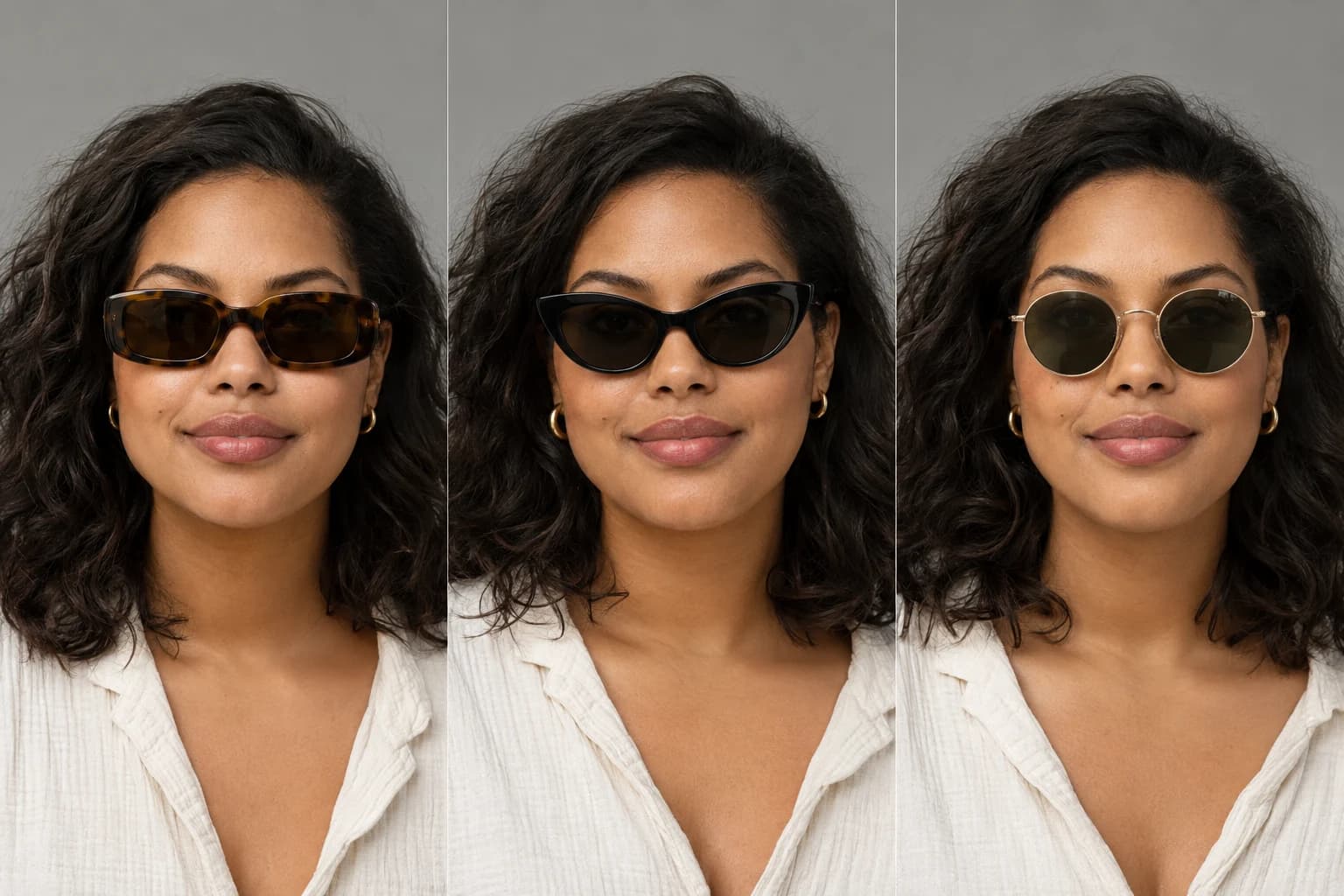
Angular frames can create a clear outline around the eyes. A heavier upper rim makes the browline more noticeable. An upswept outer corner creates a different expression again. These are styling effects, not changes to the size or proportions of your face.
| Shape | Visual effect to compare | Useful fit check | Possible tradeoff |
|---|---|---|---|
| Rectangle or softly squared frame | A horizontal, defined outline | Does the width sit comfortably at the temples? | A shallow lens may leave more surrounding skin exposed |
| Wayfarer-style frame | A substantial upper edge with angled sides | Does the bridge support the frame without cheek contact? | A fixed molded bridge offers less adjustment |
| Browline frame | More emphasis above the lenses | Are the nose pads comfortable and adjustable? | The upper rim may feel visually prominent |
| Cat-eye or upswept frame | A lifted outer silhouette | Do the outer corners extend farther than you want? | A dramatic sweep can look different from side angles |
| Round or oval frame | A softer, repeated curve | Does the overall size suit your preferred coverage? | It offers less angular contrast, which may be exactly what you like |
Try one shape outside the category you initially planned to buy. It is an easy way to discover whether you prefer contrast or repetition in your accessories.
Three real frames worth comparing
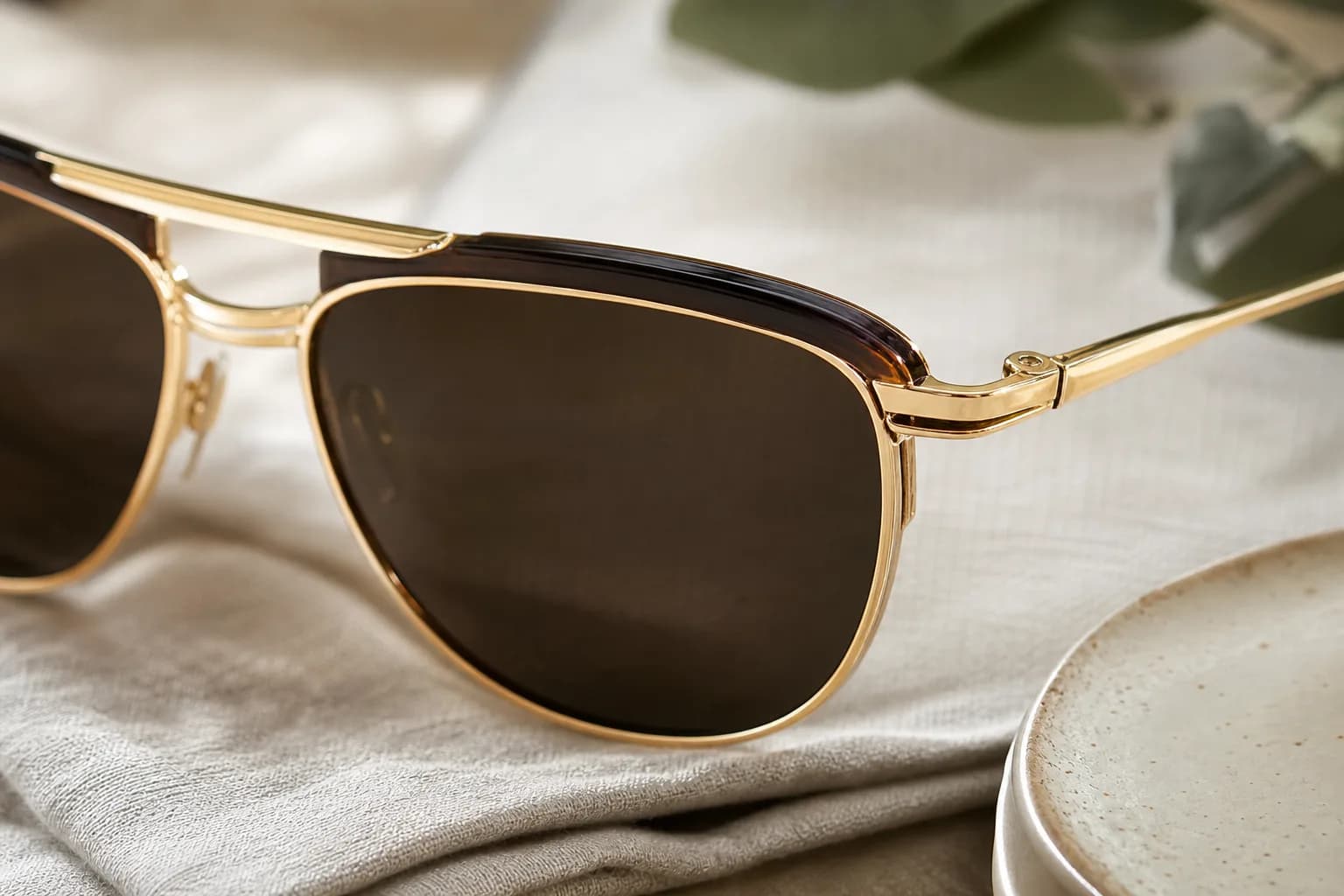
These examples are selected from manufacturer specifications, not from a fit test on every face. Color and lens variants can change the details, so check the exact model code at checkout.
| Model | Verified distinguishing feature | Why try it | Check carefully |
|---|---|---|---|
| Ray-Ban Original Wayfarer Classic RB2140 | Square acetate frame; the linked 50–22 version has a high-bridge fit | A substantial angular everyday shape | A high-bridge design may not sit well on a lower nose bridge |
| Ray-Ban Clubmaster Classic RB3016 | Browline shape with adjustable nose pads; linked version is 49–21 | You like a strong upper rim and want bridge adjustment | Nose-pad comfort and whether the top rim feels too prominent |
| Oakley Holbrook OO9102 | Square O Matter frame; the linked version has a high-bridge fit | You prefer a casual, lightweight-frame option | Exact fit and lens variant; Prizm and polarized are not interchangeable labels |
Manufacturer references: Wayfarer specifications, Clubmaster specifications, and Holbrook options. These are shape references, not a claim that a particular model will fit every round face.
Understand the numbers inside the arm
A marking such as 50–22 usually describes lens width and bridge width in millimeters. A further number commonly gives temple length. Lens width alone does not tell you the total width of the frame: the rim and hinges also take up space.
Use a pair you already find comfortable as your starting point. Note the measurements and compare the manufacturer's fit category, but expect differences between designs with similar numbers. A molded bridge and adjustable nose pads distribute contact differently.
Do not automatically size up to make your face appear smaller. A frame that is too wide may slide or sit poorly, while a narrower frame can press at the temples. The best size is the one that supports the lenses comfortably in the intended position.
Try the smile and movement checks
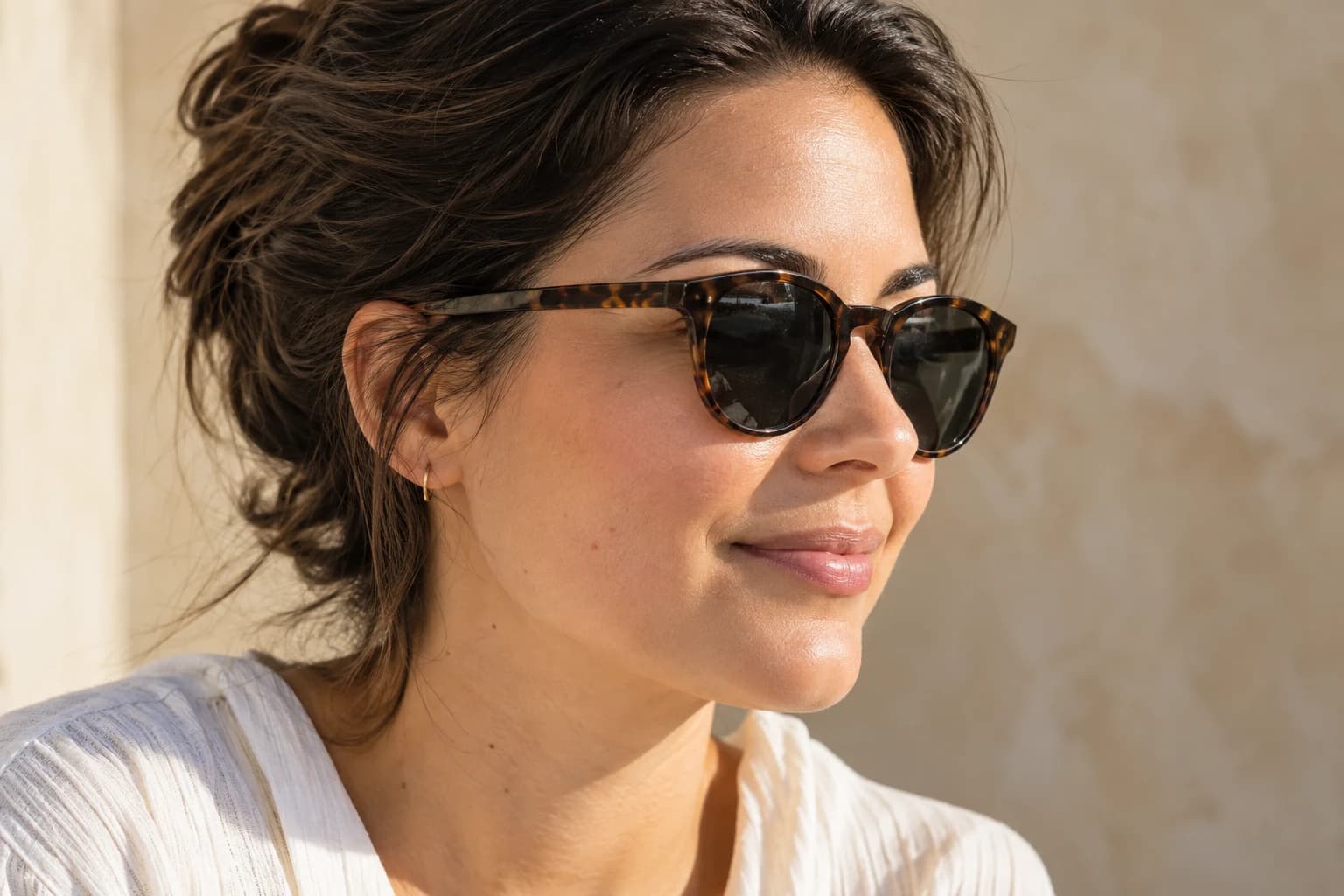
Look straight ahead, smile, and look down. The frame should not rise markedly with your cheeks or slip down whenever you lower your head. Check whether your eyelashes touch the lenses and whether the temples press behind the ears.
Keep the glasses on for several minutes if the shop allows it. A brief mirror check can miss pressure that becomes irritating later. If a frame nearly fits, ask an optician what can actually be adjusted; not every problem can be solved by bending the arms.
Take a front and side photo at a natural viewing distance. Very close selfies can exaggerate proportions and encourage you to judge a fit you would otherwise find comfortable.
Check UV protection separately from style
Look for a clear statement of 100% UVA and UVB protection or UV400. Dark lenses and mirrored finishes do not establish that protection. Polarization reduces reflected glare; it is a separate feature and does not by itself mean the lens blocks UV. American Academy of Ophthalmology guidance
For outdoor time, consider coverage from the sides as well as the front. An attractive small frame and a more protective wraparound design can serve different preferences and activities. A fashion shortlist is not a substitute for sport-specific protective eyewear where that is needed.
If you need prescription lenses, ask the dispenser to confirm protection and compatibility in the finished prescription pair. Do not infer those specifications from a picture of the non-prescription version.
Coordinate the frame with your everyday styling
Try frames while wearing your usual hairstyle. A fringe, tucked-back hair, and a high bun expose different amounts of the upper frame. Our curtain-bang guide helps you consider how hair sits around the eyes without assigning a single approved combination.
Compare frame color against your wardrobe as well as your skin. Black creates a stronger outline; a translucent or lighter frame can feel quieter. Those are preferences to judge in the mirror, not rules tied to undertones or age.
If you are comparing facial descriptions, our heart-shaped face glasses guide provides another set of shapes to try. You do not need to resolve your exact category before shopping.
Leave the shop with one clear decision
For a defined everyday outline, start with the Wayfarer. For emphasis at the brow and adjustable nose pads, compare the Clubmaster. For a more casual square frame, try the Holbrook. Reject any of them if the fit is uncomfortable, even if the silhouette looks good.
If you are changing your haircut too, use our hairstyle planning guide to keep the overall look in view. Bring the frames to the haircut appointment if fringe length is involved.
Frequently asked questions
Should a round face avoid round sunglasses?
No. Round frames can echo the face's curves deliberately. Angular styles are an option for contrast, not a requirement for attractiveness.
Are oversized sunglasses always better?
More coverage can be useful, but oversized frames still need to fit securely. A large frame that slides onto the cheeks is not automatically a better choice.
Does polarized mean UV protected?
No. Check the UV statement separately. Polarization addresses glare, while UV protection addresses ultraviolet radiation.
Clear guidance, checked before publication.
Solvi articles are structured by our editorial team and reviewed for clarity, consistency, and responsible health language. We update pages when guidance or product information changes.

Amara Lewis
Sensitive Skin Writer. Amara is fascinated by calm, barrier-first skincare and the small details that make a routine easier to tolerate. She favors thoughtful formulas, slow introductions, and less guesswork.