Best Product for Forehead Wrinkles: A Smart, Tiered Buying Guide



A nightly retinoid and broad-spectrum SPF 30 or higher every day are the best topical starting point for forehead wrinkles. But if forehead lines appear mostly when you lift your brows or concentrate, a neuromodulator treatment is generally more effective than skincare; topical formulas are strongest for prevention, surface texture, and fine lines.
That distinction makes shopping far less frustrating. Rather than hunting for one miracle jar, build your choice around what your lines do at rest, how much irritation your skin will tolerate, and whether you are open to an in-office option for a deeper crease.
The short answer: buy a routine, not a single promise
For most people seeking the best product for forehead wrinkles, the high-value cart is straightforward: an SPF you will actually wear every morning, a retinoid you can use consistently at night, and a moisturizer that makes the routine comfortable enough to continue. A peptide serum can be a useful optional layer when the goal is a temporarily more cushioned, hydrated look.
The important expectation-setting: skincare does not work like an injectable. A topical can support smoother-looking skin and soften the look of fine lines over time, but it cannot reliably erase a deep forehead crease that remains when your face is completely relaxed.
| If you notice... | Most relevant first move | What the format can realistically do |
|---|---|---|
| Fine lines that look more obvious when skin feels dry | Hydrating moisturizer or serum, plus daily SPF | Creates a plumper-looking surface and supports a more comfortable routine |
| Early or mild lines at rest | Nightly retinoid, introduced according to tolerance | Targets the topical foundation for texture and fine lines |
| Lines that deepen when you raise your brows | Discuss a neuromodulator with a qualified injector | Best-supported route for expression-driven, or dynamic, lines |
| A pronounced crease that stays visible at rest | Professional assessment for filler or fractional laser options | May be more appropriate than expecting a topical to erase the crease |
Buy by wrinkle behavior

The first shopping decision is not serum versus cream. It is dynamic versus static. Dynamic forehead lines form with repeated expression—think brow lifting, surprise, or concentration—and may soften when the forehead is relaxed. Static lines remain visible even at rest and tend to need a more realistic conversation about the limits of topical care.
Dynamic forehead lines
If your forehead looks smooth in repose but develops horizontal tracks when you animate it, build a diligent topical baseline but know its role. SPF and retinoids are still sensible long-game skincare; they simply do not stop the underlying muscle movement that makes the line appear.
A clinician-administered neuromodulator, often referred to by the brand name Botox, is the option with the strongest visible-change potential for these expression lines. It is an in-office decision, not a replacement for sun protection or a reason to abandon a gentle at-home routine.
Static forehead creases
A line that remains while your face is resting is more likely to benefit from a layered strategy. A retinoid, moisturizer, and SPF can improve the surrounding skin’s texture and help fine lines look less etched, but a deep crease is unlikely to disappear with topical products alone.
When a static line is the primary concern, ask a qualified professional whether hyaluronic acid filler or fractional laser resurfacing belongs in the conversation. Suitability, risks, recovery tolerance, and skin phototype are all part of that decision.
Use these cues before you buy:
- Choose a retinoid-led routine if your main goal is gradual improvement in fine lines and skin texture.
- Add a peptide or hyaluronic-acid-focused formula if dehydration makes lines look temporarily more pronounced.
- Consider an injector consultation if movement is the obvious driver of the line you want to change.
- Discuss resurfacing or filler only with a trained professional when a deep line remains at rest.
Build the topical foundation
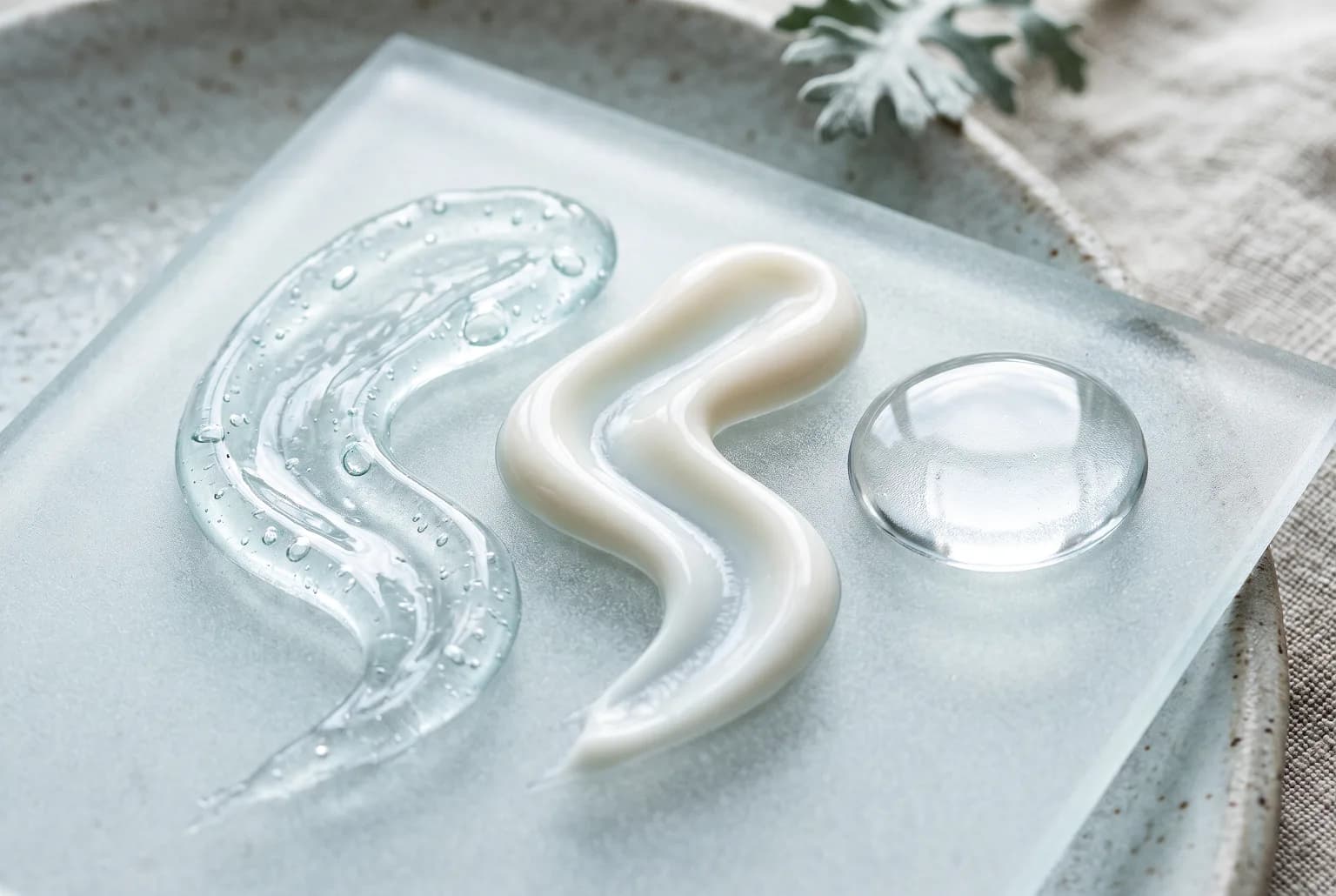
A good forehead routine is deliberately unglamorous: protect in the morning, treat at night, and avoid adding so many actives that irritation becomes the story. Retinoids can increase sun sensitivity, making daily broad-spectrum SPF an essential partner rather than an optional finishing step.
Morning
Choose a broad-spectrum SPF 30 or higher in a texture that suits your real life. A fluid is often appealing under makeup; a lotion or cream can feel more cushioning if your forehead gets dry; and a formula you enjoy applying is more valuable than one that stays unopened.
If you want a plumping step, apply a hydrating serum or lightweight moisturizer before sunscreen. Hyaluronic acid is useful here as a hydration-supporting format, particularly when fine lines look more apparent on dehydrated skin.
Evening
At night, make the retinoid your priority treatment. Prescription tretinoin is one route; over-the-counter retinol and adapalene are other retinoid options referenced in wrinkle-care discussions. The right choice is the one your skin can tolerate and use regularly, with professional guidance where appropriate.
Follow with moisturizer. A gel-cream can suit someone who dislikes a coated finish, while a richer cream may make the routine feel more comfortable when the skin feels dry or easily irritated.
- Cleanse and gently pat skin dry.
- Apply your chosen retinoid at night according to its directions and your tolerance.
- Apply moisturizer over it for a more comfortable finish.
- The following morning, use broad-spectrum SPF 30 or higher.
Choose a formula that earns its place

The most expensive format is not automatically the best product for wrinkles on the forehead. Focus on the active category, the vehicle, and whether the product fits with your skin’s tolerance. A routine that stings, flakes, or feels like too many layers is less likely to become a useful long-term habit.
Retinoid serum or cream
A retinoid serum is often a streamlined choice for someone who likes a light layer and already has a moisturizer they love. A retinoid cream can be appealing if you prefer a more emollient texture and want the treatment step to feel less bare on the skin.
Prescription tretinoin sits at the more medical end of this category, while retinol and adapalene offer non-prescription paths. Retinoid irritation potential is real, so assess tolerance rather than treating temporary discomfort as proof that a product is “working.”
Peptide serum
Peptide serums are a sensible adjunct for shoppers who enjoy a silky, watery serum step or want a formula centered on a more cushioned look. Some cosmetic formulas feature acetyl hexapeptide and are marketed with “botox-like” language; treat that phrase as cosmetic positioning, not as an interchangeable alternative to an injectable neuromodulator.
Patch test a peptide formula if you are sensitive. Its practical job in this routine is support: it can sit alongside SPF, moisturizer, and a retinoid rather than carrying the entire wrinkle plan.
Hyaluronic acid serum or moisturizer
If fine forehead lines seem to shift with dry indoor air, makeup, or a tight after-cleansing feeling, a humectant-focused serum or moisturizer may be the most satisfying add-on. Look for a texture you can layer without pilling beneath sunscreen: thin gels and fluid serums suit minimalists, while creams offer more cushion.
Use this buying checklist:
- Pick broad-spectrum SPF 30 or higher for the daily non-negotiable.
- Select one primary retinoid format instead of stacking several retinoid products.
- Match the texture to preference: fluid for a weightless feel, cream for more comfort, gel for a fresh finish.
- Consider peptides as an optional supportive step, not a replacement for a retinoid or clinical treatment.
- Patch test a peptide formula if your skin is sensitive.
When a topical isn't enough
It is completely reasonable to prefer topical skincare only. It is also reasonable to decide that a forehead line caused by movement, or a deep static crease, matters enough to discuss procedures. The most useful approach is choosing the level of intervention that aligns with your desired degree of change and your tolerance for appointment time, cost, downtime, and procedure risks.
Neuromodulators for movement-driven lines
For dynamic forehead lines, botulinum toxin treatments are the evidence-led escalation discussed most often because they address the muscle activity behind the expression. These treatments require a trained injector and involve procedure risks, so credentials, a careful consultation, and a clear discussion of your goals matter.
Filler or resurfacing for persistent creases
For a static crease, hyaluronic acid filler or fractional laser resurfacing may be considered in a professional setting. These are not casual add-ons to a serum routine: skin phototype, downtime tolerance, and the specific character of the crease should shape the plan.
Questions worth bringing to a consultation
- Is my primary concern dynamic movement, a static crease, or both?
- What degree of improvement is realistic from a topical routine alone?
- Which procedure risks and downtime considerations apply to my skin and goals?
- How does my skin phototype affect the choice of resurfacing approach?
A practical forehead-wrinkle routine
Think of this as a calm baseline rather than an aggressive correction campaign. Its value is that every step has a distinct job, and none asks a topical product to behave like a procedure.
AM routine
- Apply a hydrating serum or moisturizer if your skin feels dry or tight.
- Apply broad-spectrum SPF 30 or higher across the forehead and the rest of the face.
- Reapply sunscreen as needed during the day, following the product’s directions.
PM routine
- Cleanse gently.
- Apply one retinoid product—prescription tretinoin, over-the-counter retinol, or adapalene—as tolerated and directed.
- Seal in comfort with a moisturizer in your preferred gel, lotion, or cream texture.
What to skip
Avoid turning forehead care into a crowded rotation of overlapping treatments. The goal is a routine you can sustain, particularly because retinoids may irritate skin and make sun protection more important.
- Skip the expectation that peptides will create the same effect as a neuromodulator.
- Skip treating daily SPF as optional while using a retinoid.
- Skip assuming a deep, resting crease can be erased by an over-the-counter topical.
- Skip booking any injectable, filler, or resurfacing procedure without a trained professional.
Related reading
- Best Treatments for Forehead Wrinkles
- Fine Lines Treatment: A Practical Routine
- Best Serum for Wrinkles and Fine Lines
Frequently asked questions
What is the best product for deep forehead wrinkles?
For a topical baseline, a retinoid plus daily broad-spectrum SPF is the most useful place to start. Deep static forehead creases often need realistic expectations: filler or fractional laser resurfacing may be options to discuss with a qualified professional.
Is retinol or peptides better for forehead wrinkles?
Retinoids are the stronger topical foundation for fine lines and texture. Peptides can be a supportive addition for a plumper-looking finish, but they are not a substitute for a retinoid or an in-office neuromodulator for dynamic lines.
What works best for forehead lines from raising eyebrows?
Those are typically dynamic lines. A daily SPF and nighttime retinoid remain valuable skincare, but clinician-administered botulinum toxin is generally more effective for movement-driven lines.
Can moisturizer get rid of forehead wrinkles?
Moisturizer and hyaluronic-acid-focused products can make dehydrated fine lines look more cushioned and less noticeable. They cannot erase deep static creases or prevent the muscle movement behind dynamic forehead lines.
Sources
- Dermatology UK — Forehead lines overview
- Mayo Clinic — Wrinkles diagnosis and treatment
- Clinical review of topical/prescription options (CureMed summary)
Clear guidance, checked before publication.
Solvi articles are structured by our editorial team and reviewed for clarity, consistency, and responsible health language. We update pages when guidance or product information changes.

Amara Lewis
Sensitive Skin Writer. Amara is fascinated by calm, barrier-first skincare and the small details that make a routine easier to tolerate. She favors thoughtful formulas, slow introductions, and less guesswork.