Best Serum for Wrinkles and Fine Lines: Choose by Your Skin’s Real Priority


The best serum for wrinkles and fine lines is one matched to the change you want to prioritize: a retinoid for long-term texture-focused care, a peptide formula for a restructuring-focused routine, vitamin C for morning antioxidant support, or hyaluronic acid for a more immediately plumped look. For combination skin, the most workable approach is usually a light, targeted active serum rather than one rich formula asked to do everything.
The useful shopping question is not “What is the strongest anti-aging serum?” It is whether you need visible hydration now, a consistent night treatment for the look of lines, or a morning layer that fits beneath sunscreen without pilling. The right answer can be a small AM/PM wardrobe rather than a single overloaded bottle.
The short answer: build around one priority
Wrinkle serums work in different visual and practical lanes. Retinoids—including retinol and retinaldehyde—are the most relevant category when fine texture and the appearance of lines are your main long-term concern, but they require a measured introduction. Peptides are a compelling alternative or companion category when you want a targeted, typically easier-to-place treatment step, while hyaluronic acid is about hydration and surface plumping rather than replacing a remodeling-focused active.
Vitamin C belongs in the morning lane for antioxidant support and is especially logical when dark spots sit alongside fine lines. Growth-factor or biologic-style serums are another targeted category often considered in mature-skin routines; scrutinize the full formula, format, and cost before making one the centerpiece of your regimen.
Here is the editorial shortcut:
- Choose a retinoid serum when texture and the look of established fine lines are the priority and you can commit to nighttime use and daily SPF.
- Choose vitamin C when uneven-looking tone and dark spots share the top spot with early lines, and you want a daytime antioxidant layer.
- Choose hyaluronic acid when skin looks temporarily dehydrated, makeup is catching, or you want a cushiony finish without adding a high-intensity active.
- Choose peptides when you want a targeted support serum and prefer to keep your routine centered on a less complicated active schedule.
- Consider a growth-factor or biologic formula only if its texture, ingredient approach, and price make sense for your existing routine—not because the category sounds inherently more advanced.
Choose your wrinkle serum by the result you want
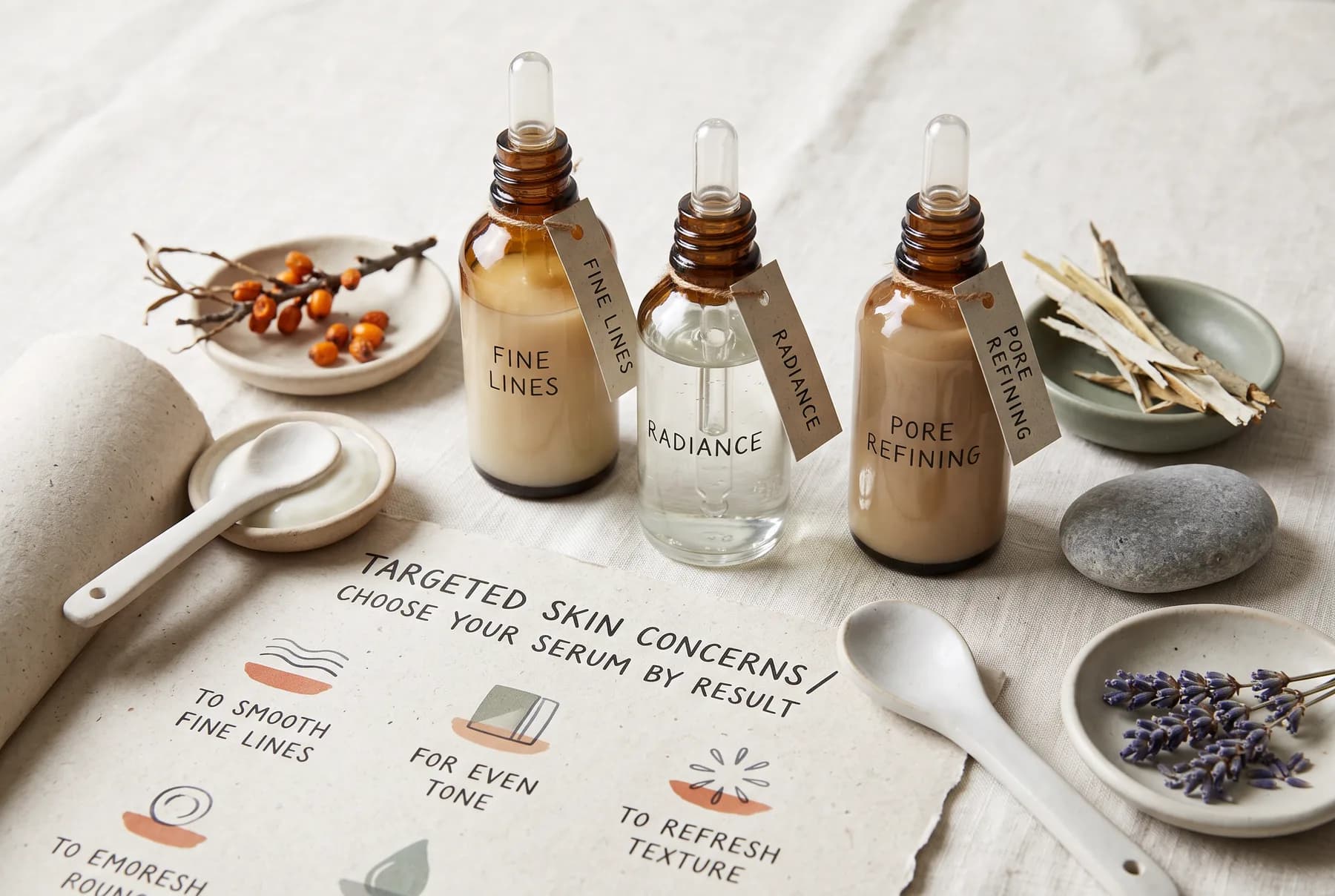
A good commercial comparison starts with the mirror, not the marketing. Fine, papery lines that become more noticeable when skin feels dry call for a different format than persistent texture or a complexion where brown spots are part of the concern. Combination skin adds a practical filter: the formula must feel light enough through the T-zone but not leave cheeks feeling tight.
| Your primary goal | Serum category to consider | Typical texture direction | Main tradeoff |
|---|---|---|---|
| Long-term focus on fine lines and texture | Retinol or retinaldehyde | Light emulsion, fluid cream, or serum | Needs gradual use and a nighttime routine |
| Morning antioxidant support, especially alongside discoloration concerns | Stable vitamin C | Watery drop, thin gel, or low-oil fluid | Can be difficult to pair with a crowded active routine |
| Immediate hydrated, smoother-looking finish | Hyaluronic acid | Slip-rich water gel or bouncy serum | Primarily a hydration and plumping step, not a replacement for a retinoid |
| A targeted restructuring-oriented routine without making retinoid your only strategy | Signal-peptide or copper-peptide formula | Clear gel, silky fluid, or light lotion | Formula details and value vary widely |
| A premium targeted option for mature skin | Growth-factor or biologic serum | Often fluid gel or lotion-serum | High cost does not remove the need for a simple, compatible routine |
When texture is the main complaint
Retinoids are the category to investigate first. Retinol and retinaldehyde are both retinoid options, but the sensible choice is the one your skin can tolerate regularly. A creamy serum can be a friendlier fit for drier areas of combination skin; a fast-absorbing gel-serum may be more pleasant if your forehead and nose get shiny by midday.
Look for clear instructions around frequency and nighttime use. Avoid treating the first application as a test of toughness: the value comes from a sustainable schedule, not from stacking it with every other active you own.
When lines and dark spots arrive together
Vitamin C makes the strongest conceptual sense as your daytime anchor. It offers antioxidant support, while the morning sunscreen step is essential to a routine designed around visible signs of photoaging. A stable vitamin C drop or thin serum is often the easiest choice under moisturizer and SPF, particularly for combination skin that dislikes heavy layers.
If you also want a retinoid, separate the roles: vitamin C in the morning and the retinoid at night. That division is less about creating a maximalist routine and more about keeping each step legible when you are assessing tolerance.
When the issue is “my skin suddenly looks creased”
Hyaluronic acid is the immediate-polish option. On damp skin, a clear water-gel or lightly viscous serum can give skin a more hydrated, cushioned appearance—useful before makeup or when indoor air has left the complexion looking flat. Follow with moisturizer so the routine does not stop at a single watery layer.
This is also an excellent format for oilier or combination skin because it can feel almost weightless. Just set expectations accurately: a hydrating serum may soften the look of dehydration lines in the moment, but it does not take the same place in a routine as a retinoid.
The three serum lanes that make sense

The most elegant strategy is a division of labor. Instead of looking for one formula to target texture, dark spots, dehydration, and every sign of aging at once, assign a job to each time of day. This is particularly helpful for combination skin, where a heavy all-in-one cream-serum can be too much for oily zones and still not feel satisfying on dry ones.
Lane one: nighttime restructuring
A retinol or retinal serum is the most direct place to start if lines and uneven texture lead your list. Consider the vehicle as carefully as the active: a fluid lotion-serum offers more comfort around the cheeks, while a lean gel or featherweight emulsion can feel better over an oily T-zone.
Use these criteria while comparing options:
- Choose a simple formula if you are new to retinoids or are already using several other treatment products.
- Favor packaging and directions that make nighttime dosing and storage straightforward.
- Consider a peptide serum on alternate nights or as a separate routine lane if you want a peptide-focused approach without crowding the same application.
- Keep strong AHA/BHA products out of the same night unless a qualified professional has advised otherwise.
Lane two: daytime defense and brightness support
A stable vitamin C serum can slot beneath moisturizer and broad-spectrum sunscreen. Watery drops tend to disappear quickly, while a silky gel serum can offer more glide; either can work for combination skin if it does not leave a sticky film that makes SPF harder to apply evenly.
The finish matters. If your sunscreen pills over a serum, the supposedly ideal formula is not ideal for your routine. Let it absorb, use a restrained amount, and choose a moisturizer only if your skin needs it.
Lane three: flexible hydration
Hyaluronic acid is the adaptable layer that can live in either routine. Apply it to slightly damp skin, then seal it in with a moisturizer appropriate for your skin type. For combination skin, that may mean a light gel-cream across the face and a small extra amount only where cheeks feel dry.
A peptide or growth-factor/biologic serum can also occupy this flexible lane depending on its instructions and texture. The shopping test is simple: it should fit around—not destabilize—your core vitamin C, retinoid, moisturizer, and sunscreen routine.
A low-drama AM/PM layering plan

Layering is where a smart serum plan becomes a routine you will actually maintain. In general, move from thinner water-based textures to thicker creams, and leave sunscreen as the final daytime skincare layer. Introduce only one new active at a time so that any persistent irritation is easier to identify.
Morning
- Cleanse gently, or simply rinse if that is what your skin tolerates best.
- Apply a stable vitamin C serum if antioxidant support and the look of dark spots are a goal.
- Add a hyaluronic acid serum only if you want more hydration or slip; do not add layers just to make the routine longer.
- Apply moisturizer as needed, choosing a lighter gel-cream if your T-zone is oily.
- Finish with broad-spectrum sunscreen.
Evening
- Cleanse away sunscreen and the day’s buildup with a formula that leaves skin comfortable, not squeaky.
- Apply your retinol or retinal serum on the nights your skin tolerates it, following the product’s directions.
- Use a peptide-focused serum on separate nights if that helps keep the routine simple and comfortable.
- Apply moisturizer; choose a richer texture for dry zones and a lighter one if you prefer it through the center of the face.
- Keep strong AHA/BHA exfoliants out of the same night as your retinoid without professional guidance.
[Derrm Tip] Retinoids are used at night and can increase photosensitivity, so daily sunscreen is a non-negotiable partner rather than an optional finishing touch.
How to compare formulas before you buy
“Best” is partly a format question. A dropper can make a thin vitamin C fluid easy to distribute; an airless pump can be more convenient for a silky retinoid emulsion; a gel serum may suit an oily forehead better than a buttery lotion. None of those details matter, however, if the formula makes your routine feel overcomplicated or routinely clashes with sunscreen.
Use this shortlist at the shelf or product page:
- Skin feel: For oily or combination skin, seek a thin fluid, water gel, or light emulsion that does not leave a slippery residue under SPF.
- Active role: Buy for one primary role—retinoid, vitamin C, peptide, or hydration—before seeking extra claims.
- Tolerance plan: If you are adding retinoids, choose a formula and cadence you can introduce gradually rather than jumping into multiple new actives.
- Routine compatibility: Check whether the serum is designed for AM or PM use and whether your current exfoliant schedule needs simplifying.
- Value: Compare how often you will realistically use it. An expensive targeted serum has poor value if its texture, timing, or active overlap keeps it in the cabinet.
For mature combination skin, a practical pairing is a light morning vitamin C formula, a non-greasy hydrating serum when needed, and a retinoid or peptide-based treatment in the evening. For oily skin, avoid assuming “natural” automatically means light: plant oils and rich botanical blends may feel more occlusive than a simple water-gel, even when the label emphasizes natural ingredients.
What to skip—or at least slow down
The fastest way to make a wrinkle-serum routine frustrating is to mistake intensity for precision. A mix of strong exfoliating acids, retinoids, vitamin C, peptide boosters, and multiple new moisturizers gives you too many variables and may make persistent irritation impossible to trace.
Skip if your plan looks like this
- Starting a new retinoid, a strong AHA/BHA exfoliant, and several additional actives in the same week.
- Using retinoids during the day rather than reserving them for nighttime use.
- Applying a retinoid and strong AHA/BHA exfoliant on the same night without guidance.
- Continuing a product that causes persistent irritation instead of stopping and reassessing.
- Buying a rich, oil-forward serum for combination skin solely because it is marketed as “anti-aging.”
If sensitivity, a changing skin condition, or uncertainty about combining treatments is part of the picture, a dermatologist can help make the routine more specific. The goal is not to collect categories; it is to create a deliberate, tolerable system that supports your primary concern.
Related reading
- Best Cream for Fine Lines: Day and Night Guide
- Eye Treatments for Fine Lines: What Works
- Fine Lines Treatment: A Practical Routine
Frequently asked questions
What is the best serum ingredient for deep-looking wrinkles?
Retinoids are the leading category to consider when long-term attention to the appearance of lines and texture is the goal. Retinol and retinaldehyde are options within that category; nighttime use, gradual introduction, and daily sunscreen are key practical considerations.
Can I use vitamin C and retinol in the same routine?
A clear, commonly manageable arrangement is vitamin C in the morning and retinol or retinal at night. This also makes it easier to monitor how your skin responds to each active.
Is hyaluronic acid enough for fine lines?
Hyaluronic acid can give skin a more hydrated, temporarily plumped look, which may soften the appearance of dehydration-related fine lines. It is best viewed as a hydration layer rather than a substitute for a retinoid-focused treatment.
What serum texture is best for combination skin?
Start with water-light drops, gels, or light emulsions. The best texture absorbs without making the T-zone feel coated, yet layers comfortably with moisturizer where the cheeks need more support.
Sources
- The New York Times, Well coverage and dermatologist reporting on retinoids and wrinkle creams
- PubMed, peer-reviewed literature and reviews on retinoids in photoaging
- The Skin Cancer Foundation, guidance on sun protection and skincare
Clear guidance, checked before publication.
Solvi articles are structured by our editorial team and reviewed for clarity, consistency, and responsible health language. We update pages when guidance or product information changes.

Clara Evans
Ingredient Research Contributor. Clara examines ingredient lists and formulation details, separating what a product contains from what its marketing promises.