
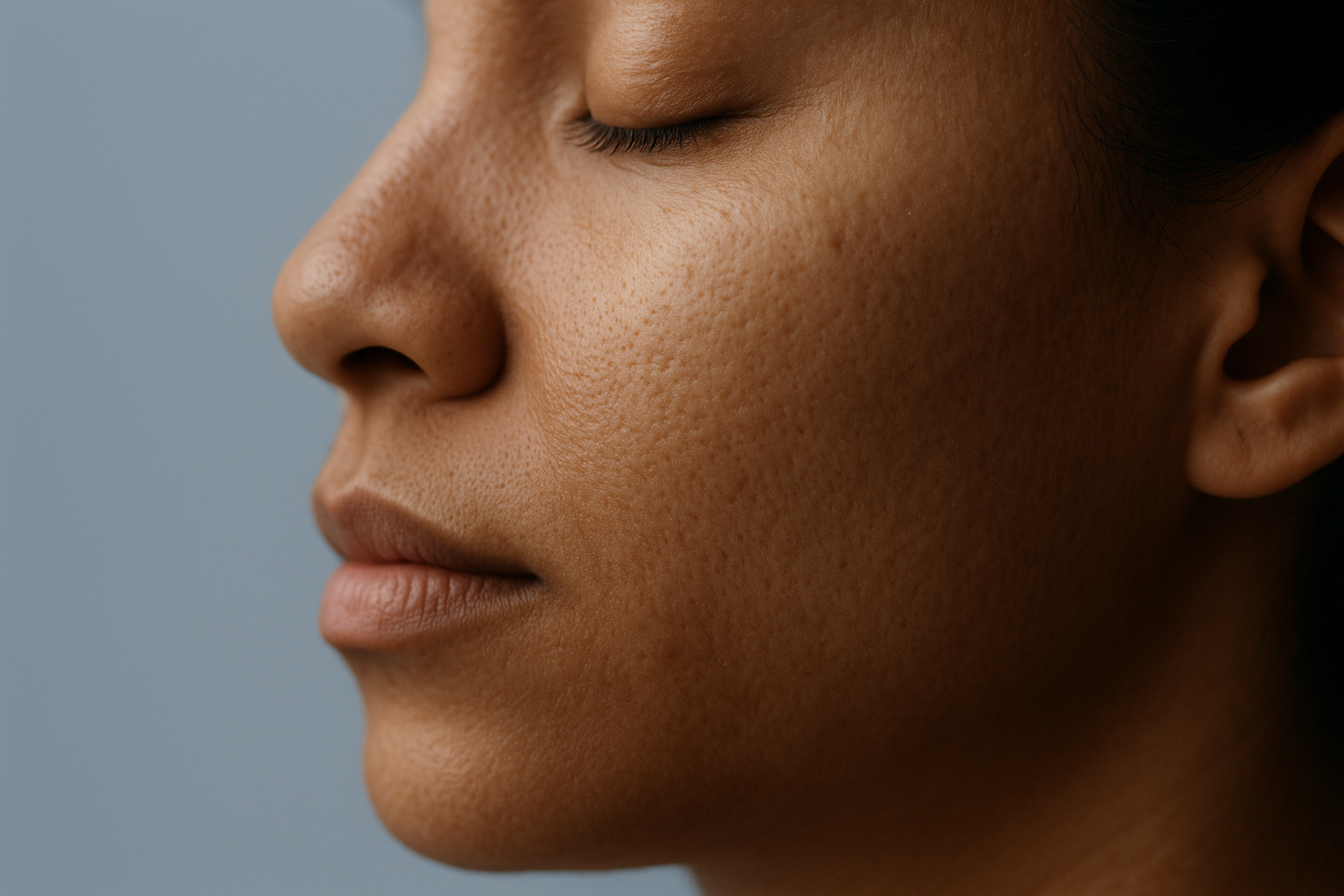
Short answer: If you have sensitive skin, favor gentler retinoid molecules (retinaldehyde or low‐strength retinol in a stable, encapsulated or time‐release formula) or a well-introduced prescription retinoid with lower irritation potential (adapalene 0.1% is often better tolerated than tretinoin). Start slowly (patch test, once or twice weekly), use moisturizers (the "sandwich" or buffering techniques), and always use daytime sunscreen. If you get severe burning, blistering, or persistent increased redness, stop and see a dermatologist. (pmc.ncbi.nlm.nih.gov)
Why retinoids can irritate sensitive skin
Retinoids (vitamin A derivatives) increase skin cell turnover and alter epidermal gene expression — actions that help acne, texture, and signs of photoaging but commonly trigger local irritation (redness, dryness, peeling, stinging). That irritation is dose‐ and molecule‐dependent: tretinoin (retinoic acid) is the most active and most irritating, while precursors such as retinol and retinaldehyde tend to cause less irritation because they must be converted in the skin to the active form. Formulation and delivery (microspheres, encapsulation, vehicles) also strongly affect tolerability. (pmc.ncbi.nlm.nih.gov)
Which retinoid molecules are usually gentler? (overview)
-
Retinyl esters (e.g., retinyl palmitate): weakest activity and usually the gentlest, but also the slowest to produce measurable results. (pmc.ncbi.nlm.nih.gov)
-
Retinol: a commonly used over‐the‐counter option that is less irritating than prescription tretinoin while still effective at supported concentrations (often 0.025–1%). Start low and progress. (pmc.ncbi.nlm.nih.gov)
-
Retinaldehyde (retinal): one metabolic step closer to retinoic acid and often reported as offering a favorable balance of activity and tolerability; several clinical studies show good long‐term tolerance at lower concentrations. If your skin is very sensitive, retinaldehyde is a strong consideration. (pubmed.ncbi.nlm.nih.gov)
-
Adapalene (synthetic retinoid): available over‐the‐counter at 0.1% and by prescription at higher strengths; multiple irritation‐comparison studies show adapalene 0.1% is generally less irritating than tretinoin formulations and has a favorable tolerability profile when introduced correctly. This makes adapalene a reasonable option for people with sensitive skin who need a prescription‐strength retinoid. (pubmed.ncbi.nlm.nih.gov)
-
Tretinoin and other prescription retinoids (tazarotene, trifarotene): effective but more likely to irritate; not first choice for very reactive skin unless prescribed with a clear acclimation plan. (pmc.ncbi.nlm.nih.gov)
Formulation features that reduce irritation
Look for these formulation qualities rather than only a percent on the label:
-
Encapsulated or microsphere retinol/retinoid (controlled release) — slower delivery to skin cells reduces peak irritation. (onlinelibrary.wiley.com)
-
Lower concentration and stabilized retinol (some stabilized 0.1% retinol products show clinical benefit with low irritation in trials). (s3.amazonaws.com)
-
Creamy, emollient vehicles or "retinol in a moisturizer" rather than alcohol‐heavy serums (less barrier disruption). (pmc.ncbi.nlm.nih.gov)
-
Combination products that pair retinoids with barrier‐supporting ingredients (ceramides, niacinamide, glycerin) can improve tolerability. (pmc.ncbi.nlm.nih.gov)
How to choose the best retinol for your sensitive skin (practical checklist)
-
Prefer a milder molecule to start: retinaldehyde or a low‐strength retinol (e.g., stabilized 0.025–0.1%). (pubmed.ncbi.nlm.nih.gov)
-
Choose an emollient, low‐alcohol vehicle with barrier‐supporting ingredients (ceramides, glycerin, hyaluronic acid). (pmc.ncbi.nlm.nih.gov)
-
If you need a prescription option, discuss adapalene 0.1% (well‐tolerated) with your dermatologist. (pubmed.ncbi.nlm.nih.gov)
-
Start with a conservative frequency (see next section) and plan to increase based on tolerance. (my.clevelandclinic.org)
A gentle introduction plan (step‐by‐step)
-
Patch test: apply a small amount to the inner forearm or behind the ear once and wait 48–72 hours for delayed reactions. If severe redness or swelling occurs, don't proceed and consult a clinician. (my.clevelandclinic.org)
-
Start frequency: apply once every 3–4 nights (or less) at night for the first 2–4 weeks. Gradually increase to every other night, then nightly as tolerated. Some sensitive skin patients remain at 2–3 nights/week long term. (my.clevelandclinic.org)
-
Buffering/sandwich method: apply a thin layer of moisturizer before your retinoid (to dilute and buffer), then apply the retinoid, and follow with another moisturizer if needed. Alternatively, mix a pea‐sized amount of retinol into your moisturizer. Both approaches commonly reduce stinging and peeling. (my.clevelandclinic.org)
-
Use moisturizer nightly and aim for a ceramide‐rich daytime moisturizer. If acute irritation occurs (marked burning, crackling, oozing), stop the retinoid and use soothing barrier repair products; see a dermatologist if severe. (pmc.ncbi.nlm.nih.gov)
-
Sunscreen every morning: retinoids don't make you chemically photosensitive like oral drugs do, but they can thin the stratum corneum transiently and increase visible sun sensitivity — daily SPF 30+ is essential. (aad.org)
Common mistakes that cause avoidable irritation
-
Starting too frequently or with a high‐strength prescription retinoid without an acclimation plan. (pmc.ncbi.nlm.nih.gov)
-
Layering other strong actives (high‐strength AHAs, BHAs, benzoyl peroxide) on the same night as a retinoid during the acclimation phase; these combinations raise irritation risk. Instead, alternate nights. (pmc.ncbi.nlm.nih.gov)
-
Using products with drying alcohols or fragrances that weaken the skin barrier. Opt for fragrance‐free, low‐alcohol formulas. (pmc.ncbi.nlm.nih.gov)
Special situations: rosacea, eczema, and very reactive skin
People with rosacea or active eczema often tolerate topical retinoids poorly. Some can still use gentler options (very low‐strength retinaldehyde or retinol in a barrier cream) or prescription adapalene with close monitoring, but many dermatologists recommend treating baseline inflammation and repairing barrier function before initiating a retinoid. Discuss individual risks and a staged plan with your dermatologist. (aad.org)
Pregnancy and breastfeeding
Because systemic retinoids (oral isotretinoin) cause fetal harm, professional groups and product labels take a precautionary approach to topical retinoids. Most guidelines advise avoiding topical retinoids during pregnancy and in women planning pregnancy; evidence on topical retinoids is mixed but insufficient to guarantee safety, so alternatives are usually recommended. If you are pregnant, trying to conceive, or breastfeeding, stop retinoids and consult your clinician about safer options. (doi.org)
When to consider a prescription instead of OTC retinol
- If over‐the‐counter retinol/retinal leave you with persistent acne, inflammatory lesions, or you need faster, stronger results, a prescription retinoid (adapalene or tretinoin) may be recommended. Adapalene 0.1% has been shown in multiple trials to be less irritating than tretinoin and is often the first prescription choice for people who need stronger therapy but have sensitive skin. Work with a dermatologist to pick the right molecule and tolerance plan. (pubmed.ncbi.nlm.nih.gov)
Red flags — stop and see a board‐certified dermatologist
Stop the product and seek dermatology care if you have:
-
Rapidly spreading redness, blistering, open sores, or oozing.
-
Painful burning beyond mild stinging or tightness that lasts more than a few days after stopping.
-
Signs of secondary infection (yellow crusting, increasing pain, fever).
-
New or worsening hyperpigmentation after inflammation that does not improve with stopping the retinoid.
These reactions can indicate severe retinoid dermatitis, allergy, or a contact dermatitis from another ingredient; a dermatologist will evaluate and recommend topical steroids, barrier repair, or patch testing if needed. (my.clevelandclinic.org)
How long before you see results?
For texture and acne improvements you may see early changes in 6–12 weeks; more measurable improvement in fine lines and pigmentation usually takes 3–6 months of regular, tolerated use. Because sensitive skin often requires a slower ramp‐up, allow more time and focus on consistent, low‐irritation application rather than rushing strength. (pmc.ncbi.nlm.nih.gov)
Quick product‐selection rules (non‐branded)
-
Molecule: retinaldehyde or low‐strength, stabilized retinol for sensitivity. (pubmed.ncbi.nlm.nih.gov)
-
Delivery: encapsulated or time‐release for lower peak irritation. (onlinelibrary.wiley.com)
-
Vehicle: creamy, moisturizing, fragrance‐free, with ceramides or glycerin. (pmc.ncbi.nlm.nih.gov)
-
If you need prescription power: discuss adapalene 0.1% with your dermatologist. (pubmed.ncbi.nlm.nih.gov)
FAQ
Q: Can I use retinol if I have rosacea?
A: Maybe — many people with rosacea are sensitive. Dermatologists often treat baseline inflammation and rebuild the barrier (with gentle cleansers and moisturizers) before trying very low‐strength or buffered retinoids. Some patients tolerate adapalene 0.1% or retinaldehyde better than tretinoin. Always start slowly and under clinician guidance. (aad.org)
Q: Should I apply moisturizer before or after retinol?
A: Both approaches are used. Applying a thin moisturizer first (the "buffer" method) or mixing retinol into moisturizer reduces irritation. The "sandwich" approach (moisturizer → retinoid → moisturizer) also helps. Pick one method and be consistent. (my.clevelandclinic.org)
Q: How do I know if the irritation is normal adjustment or an allergic reaction?
A: Mild, short‐lived redness, dryness, and flaking are common during acclimation. Rapid swelling, intense burning, blistering, or persistent worsening after stopping the product suggest allergy or severe dermatitis — stop use and see a dermatologist. Consider patch testing if you suspect an ingredient allergy. (pmc.ncbi.nlm.nih.gov)
Q: Can I combine retinol with vitamin C or AHAs?
A: During the acclimation phase, avoid using multiple strong actives the same night. Once skin tolerates nightly retinoid use, you can often layer or alternate vitamin C in the morning and mild chemical exfoliants (low‐strength AHAs/BHAs) on alternate nights, but proceed cautiously and monitor for irritation. (pmc.ncbi.nlm.nih.gov)
Bottom line
Sensitive skin doesn't have to mean 'no retinoid.' Choosing a gentler molecule (retinaldehyde or low‐strength retinol), prioritizing tolerant formulations (encapsulated/time‐release, emollient vehicles), and introducing the product slowly with buffering moisturizers reduces irritation risk. If you're pregnant, planning pregnancy, or breastfeeding, avoid topical retinoids and talk with your clinician about alternatives. If severe or persistent reactions occur, consult a board‐certified dermatologist for personalized care. (pmc.ncbi.nlm.nih.gov)
Sources
See these evidence‐based resources for more detail:
-
American Academy of Dermatology — Retinoid or retinol? (patient guidance). https://www.aad.org/public/everyday-care/skin-care-secrets/anti-aging/retinoid-retinol. (aad.org)
-
Cleveland Clinic — Retinol: Cream, serum, what it is, benefits, how to use. https://my.clevelandclinic.org/health/treatments/23293-retinol. (my.clevelandclinic.org)
-
Saurat et al., tolerance profile of retinol, retinaldehyde, and retinoic acid (PubMed review/study). https://pubmed.ncbi.nlm.nih.gov/10473963/. (pubmed.ncbi.nlm.nih.gov)
-
Adapalene cumulative irritation / low‐irritation studies (PubMed). https://pubmed.ncbi.nlm.nih.gov/9204086/. (pubmed.ncbi.nlm.nih.gov)
-
Comprehensive review: strategies to reduce retinoid‐induced skin irritation (PMC). https://www.ncbi.nlm.nih.gov/pmc/articles/PMC11344648/. (pmc.ncbi.nlm.nih.gov)
-
DermNet (topical retinoids overview). https://dermnetnz.org/topics/topical-retinoids. (dermnetnz.org)
-
JAAD guidelines and consensus statements on acne and retinoid use (2023 guideline summary). DOI: 10.1016/j.jaad.2023.12.017. (doi.org)
-
Systematic reviews on topical retinoids in pregnancy (meta-analyses and cohort data). Example PubMed: https://pubmed.ncbi.nlm.nih.gov/26215715/ and Nordic cohort summaries. (pubmed.ncbi.nlm.nih.gov)
Sources
-
PubMed – Tolerance profile of retinol, retinaldehyde and retinoic acid
-
PMC – Strategies to reduce retinoid-induced skin irritation (review)
-
PubMed – Pregnancy outcomes after topical retinoid exposure (meta-analysis)
-
Journal of the American Academy of Dermatology – Guidelines of care (2023)
SOLVI SKIN ANALYSIS